MLB Player Change Teams Because of Taxes?

image

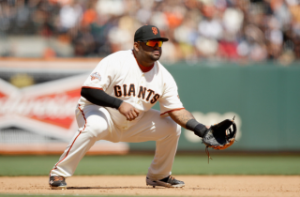
Pablo Sandoval few days ago signed with the Boston Red Sox in a free agent deal for five years and worth $100 Million. Kurt Badenhausen of Forbes wrote why Pablo left San Francisco:

Massachusetts has a flat personal income tax rate of 5.2%. California uses a progressive rate topping out at 13.3% at and above $1 million of income. In other words, 95% of Sandoval’s income would be taxed at this 13.3% rate if he re-signed with the Giants.

The Giants play in the National League West, which boasts three teams from California, including the Giants. This means that in addition to the Giants’ 81 home games, the team plays another 18 road games in California. The Giants also play three road games against their cross-bay rival A’s, bringing their total California games to 103.While Boston has to play ten games next year at the New York Yankees, it also has division opponents in Florida and Canada, where the players will pay no state income taxes (and no federal taxes in Canada).

Baseball players living in no-tax states have about 18.4% of their 2015 salaries sheltered from state taxes due to Spring Training taking place in tax-free states (Arizona does not tax Spring Training days). The Red Sox enjoy an additional 14.3% of tax-sheltered income from road games, while the Giants only get to shelter another 5.8%.

Read the rest here

Ball State Students Stumble Upon Economics

image

Ball State athletics has an annual budget of over $17 Million a year. After revenue is collected from tickets, teams paying the University, parking, donations, etc it still has a budget shortfall of $11 Million. Enter the students. Fees are tact on to their tuition to make up this shortfall. Students did not realize this like this one:

“Wow, I wasn’t aware of that,” Ball State freshman Macon Shroyer from Selma

All the MAC schools are doing what Ball State is doing.

The vast majority of students in the Mid-American Conference, of which BSU is a member, are “flat-out stunned” to learn how much they pay in athletic subsidies, says David Ridpath, associate professor of sports administration at Ohio University, who surveyed 3,243 MAC students.

You can read the rest of the article here.

DirecTV & NFL Strike $1.5 Billion Year Deal

DirecTV shrugged off the NFL’s recent controversies and increased their bid for a TV deal by 50%. Eight year deal worth $1.5 Billion year.

Per NFL Communications

NEW YORK and EL SEGUNDO, Calif., Oct. 1, 2014 – The National Football League and DIRECTV have extended and expanded DIRECTV’s exclusive rights to carry NFL SUNDAY TICKET and its package of every Sunday afternoon out-of-market game through a new multi-year agreement.

The new agreement also expands DIRECTV’s rights to stream NFL SUNDAY TICKET live on mobile devices and via broadband, known as NFL SUNDAY TICKET.TV, as previously announced.

Specific terms of the agreement were not disclosed.

Indianapolis Still Paying Off RCA Dome Debt

Indianapolis-indiana-rca-dome
In 1984 the RCA Dome opened for business its primary tenant was the Indianapolis Colts. The total cost to complete the RCA Dome was $77.5 Million($176.5 Million in present day inflation adjusted pricing). The cost was financed by the taxpayers of Indianapolis($47.2 million worth of bonds) and The Lilly Endowment/The Krannert Charitable Trust($30 Million). In 2006 the city undertook building a new stadium where the Colts presently play today. In 2006 the total outstanding debt on principal still stood at $75 Million and scheduled to be paid off by 2021. Before 2006, the actual debt was supposed to be paid off by 2013, but through refinancing of bonds, it jumped to 2021.

The city of Indianapolis does its best to make access in researching debt it owes on things tedious to find. The most current numbers I could find were published in 2010 showing RCA Dome debt standing at $61 Million. With eleven years of payments left comes to about $5.5 Million in annual payments on an already demolished structure.

Investors make a lot of money off local governments through time in financing these short term adventures that politicians want. Lucas Oil Stadium where the Colts presently play was built for $700 Million along with their new $275 Million Convention Center. This was financed over thirty years and once interest/financing charges are factored in, the combined project will cost taxpayers about $1.8 billion.

How Many U.S. Golf Courses Are Closing Yearly?

Several times during the last few months while listening to sports talk radio I would hear the claim that “400 golf courses are closing yearly in America”. This went along with the theme that golf participation is declining and younger Americans are not joining clubs while current members are getting too old for the game. This peaked my interest because the claim of 400 a year is a lot of golf courses. So I decided to research it and find out what was happening. Bloomberg News had a nice write up back in January of this year and here is what they found:

More golf courses closed than opened in the U.S. in 2013 for the eighth straight year, according to the National Golf Foundation.

A total of 14 18-hole courses opened last year, up from 13.5 in 2012, while 157.5 courses were closed during the year, three more than a year earlier, the Jupiter, Florida-based organization said in a statement on its website. The organization counts every nine holes as 0.5 of a course.

Since 2006, course closings have outnumbered openings after more than 4,500 courses had opened over the previous 15 years. Those courses, many of which were built as part of real estate projects, shut down as the U.S. recession led to a reduction in home sales needed to support the courses. Golf club memberships and rounds played also declined during the recession.

Of the closings, 66 percent charged less than $40 for greens fees during peak times. The closings decreased the total number of U.S. golf courses to 14,564.5, the Foundation said. Public courses made up 97 percent (151.5) of the closures, with private courses accounting for 4 percent (6). A total of 8.5 public courses opened last year, compared with 5.5 new private courses.

Since 2006, 643 18-hole courses have closed, the organization said. The decline has followed a 40 percent growth from 1986 through 2005, a period with more than 4,500 courses opening, according the foundation data.

So while golf courses are closing, not at the exent the ESPN radio host is making it out to be.

Indianapolis Colts Training Camp

image

Anderson Herald Bulletin reported some economic numbers related to the Indianapolis Colts training camp. An event like this is hard to gauge on economic impact but they did have some financials:

Since the Colts training camp returned to Anderson in 2010, city officials and business leaders have said the estimated economic impact each year from the event is between $5 million and $6.5 million.

The camp does cost the city money:

Winkler said the city has also paid the NFL more than $559,740 between 2010 and 2014 to provide security at the camp. He said each year the city enters a contract with the NFL and Anderson University with each agreeing to pay a portion of the costs associated with the event.

At least $200,000 of the funds used to pay the NFL was in forgiven loan payments of $50,000 each, by the city, on behalf of Anderson University, Winkler said. The school had borrowed money from the city to pay for expenses related to the camp, he said.

The Colts also do not pay the city any money to hold the camp in Anderson.

MLB All Star Game: Self-Serve Beer

beer

With the MLB All Star Game about to begin, fans will be able to buy their beer at a self-serve beer machines. The idea has been attempted before, but this time around the technology is a lot of better. Here is how it works:

After an ID check — “Just because it’s self-serve doesn’t mean it’s unmonitored,” Twins spokesman Chris Iles said — fans buy a card pre-loaded with $10, $20 or $40. Then they hop in line for their beer of choice: Budweiser and Bud Light for 38 cents an ounce (a little over $6 for a pint), or Goose Island 312 Urban Pale Ale and Shock Top’s Lemon Shandy for 40 cents per ounce. The self-pouring is monitored, too, to stop anyone who may be overserving themselves.

There have been some issues…..

Target Field’s new machines have LCD screens with pouring instructions behind each set of taps, but Spike said they ran into a few hiccups with messy pours on a test run last week, especially after the machines sat idle. The stations will stay at Target Field for the rest of the season, and plans for expansion or changes will depend on fan feedback.

It will be interesting to see the reviews on this machine. Many ballparks are facing actual physical fan attendance issues and this machine would easily replace many beer vendors if it was successful.