
Numbers are in and Indiana government had a budget surplus from their 2015 Continue reading →
Numbers are in and Indiana government had a budget surplus from their 2015 Continue reading →
H/T Glenn Reynolds of PJ Media

H/T BallotPedia.org
The numbers are staggering in how fast medicaid is growing and spending. This isn’t a sexy topic to talk about but that is the psychosis of America’s political landscape today. Here is some recent news pertaining to this federal government social program.
Via Wall Street Journal –
Another source, The Heritage Foundation added more data to the topic of medicaid growth –
One more item from Heritage is the overall growth of entitlement spending.

Obamacare for all intensive purposes is a gateway to universal healthcare via medicaid. When the ACA passed in 2010 it set up a medicaid program where the feds matched dollar for dollar states medicaid expansion. Here is a detailed explanation from the Chicago Tribune of an example in Illinois where estimated costs have ballooned from $500 Million to $2 Billion:
Original projections anticipated that 199,000 residents would sign up in 2014, potentially rising to no more than 342,000. State officials estimated a monthly, per person cost of $454, and revised that number upward to $882 in the document sent to in June to federal officials.
But through December, 540,877 joined Medicaid’s ranks. State officials said thousands more likely signed up through January.
Nationally, medicaid has exploded via Obamacare (9.7 million new enrollees) which means long term federal costs for ALL taxpayers.
Dr. Ed Yardeni has put together a post showing the consumer has saved dollars YTD on gasoline prices, the savings is being eaten up by higher medical expenses.

Last week, I observed that while consumers are spending less of their budgets on gasoline, they are spending more on health care. The latest data through January show that the percentage of current-dollar consumption for gasoline plunged from last year’s high of 3.2% to 2.1% in January. Consumers saved $133 billion (saar) on gasoline over this period.
On the other hand, the percentage of their outlays for health care goods and services rose from last year’s low of 20.0% during March to 20.6% during January. I received lots of inquiries about this topic. Most readers want to know if this is attributable to Obamacare, which seems to have raised health insurance premiums, deductibles, and copays. I think so, but I don’t have the data to corroborate this conjecture.
Health care consumption includes spending paid for by both insurance and government programs, as well as out-of-pocket costs. Presumably and anecdotally, the latter have risen sharply. However, that wouldn’t necessarily bloat overall spending, though more out-of-pocket outlays would depress spending on other goods and services.
The Tax Foundation put together a chart showing how federal tax dollars were spent.

Compare that to 1962 federal spending

Indiana Governor Mike Pence submitted his budget proposal to the House and Senate for approval. The two bodies will debate the bill and then vote on a final budget at a later date.
I went over to the PDF file the state put out on overall spending areas of the budget. The one big glaring issue is the amount of federal funding the state receives for whatever programs are tied with that. Many people will argue that it captures the money Hoosiers pay in federal taxes and brings it back in the state. In that case, the money shouldn’t leave peoples paychecks at and just have it working economically in the first place.
Here are some budget numbers I found in the proposal. The proposal is for fiscal years 2016/2017:
Both years will cost Hoosier’s around $62 Billion
Education will eat up about 33% of the budget with spending projected at $22.5 Billion
Welfare (Food Stamps, Welfare, Medicaid, etc.) is projected at $28 Billion. $19 Billion of that is sent to Indiana by the Federal government. Start grasping we spend more on welfare then education.
Public Safety spending for the budget cycle is $3 Billion. I know Indiana prisons got more money but expect that to go up throughout the years. Criminals now have to serve 75% of the sentences.
The Governor’s office projected federal funds contributing to the budget for a total of $24.9 Billion.
Just Facts Daily posed a question to readers regarding healthcare payments. Here is the question and answer:
What portion of all healthcare spending in the U.S. is directly paid by consumers to healthcare providers (i.e., not indirectly paid through middlemen like insurance companies or governments)?
Less than 25%
In 2009, consumers directly paid for 12% of all healthcare spending in the U.S., as compared to 48% in 1960. This trend has been driven by government policies and is a major factor in the rise of healthcare spending, because it reduces consumers’ incentive to shop for the best value.
The new healthcare law that passed in 2010 was more of an expansion of getting people on medicaid then getting insurance. Medicaid is the “universal health care” that most don’t realize exists and it is taking on millions of new people each year. FORBES magazine has pretty lengthy write up about this program along with medicare.
Doctors seeing Medicare patients face a 24 percent cut in reimbursements beginning January 1. But almost no one has grasped that those cuts will hit Medicaid too—thanks to Obamacare. Together both programs cover more than 100 million Americans, and the government expects about 9 million more people to join Medicaid next year.
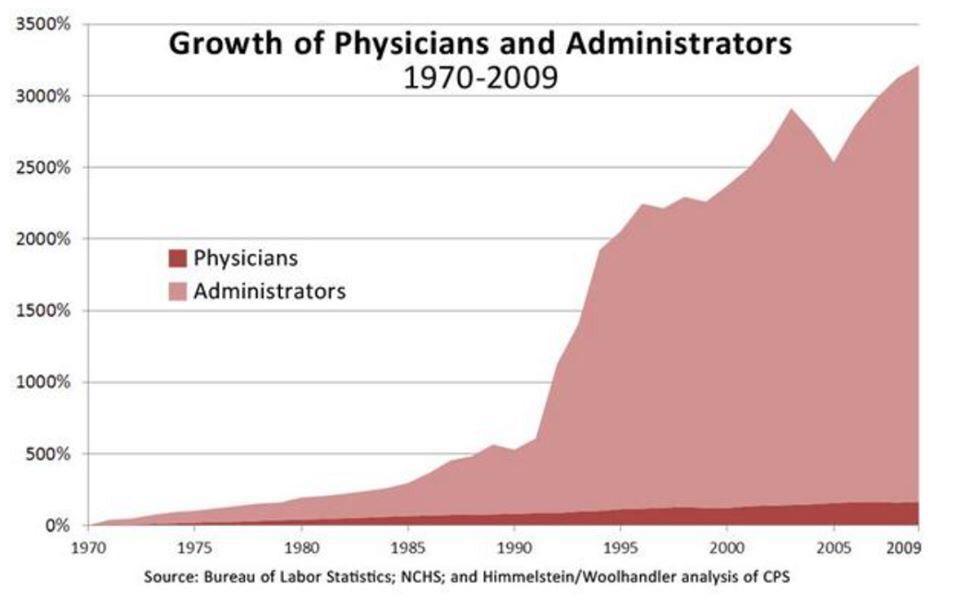
The number of just regular doctors is drying up as new doctors coming out of med school go into specialty areas. Doctors cannot afford new Medicaid patients and here is one reason why:
Medicaid pays doctors about 59 percent of what medicare pays them—which is why doctors increasingly refuse to take new Medicaid patients.
In 2012 doctors ran to the exits in fleeing medicaid.
The Centers for Medicare and Medicaid Services (CMS) recently released a document showing that 9,500 doctors who had previously accepted Medicaid patients refused to do so in 2012.
In 2013 Congress voted to increase medicaid payments at the same rate of medicare. Now that is about to get cut again. The up and down of government intrusion in healthcare as this complicated law unfolds is taking a toll on our healthcare system. The people who suffer ultimately will be the patients.
 Hoosier Econ