California Pension System Imploding

With Detroit bankruptcy being approved just a few weeks ago look for many other municipalities and possibly states to use similar methods to fend off economically impossible to meet financial demands.
The next bankruptcy is best captured in the LA Times article entitled “California pension funds are running dry” :

The state’s pension goliath, the California Public Employees’ Retirement System, had $281 billion to cover the benefits promised to 1.3 million workers and retirees in 2013. Yet it needed an additional $57 billion to meet future obligations.

The bill at the state teachers’ pension fund is even higher: It has an estimated shortfall of $70 billion.

Bankruptcy has already happened in some California towns.

Meanwhile, cash-strapped cities are facing escalating bills. Rising pension costs contributed to bankruptcies in Stockton, San Bernardino and Vallejo.

The man behind the transparency movement in California is state Controller John Chiang. He started a website tracking a towns finances for the public to see and it grew from there.

College Student Loan Debt Exploding

image

When talking about economic “bubbles” one that is hardly ever mentioned is student loan debt. CreditCards.com had this about the amount of debt:

Debt affects people of all ages, but an explosion of student debt is weighing down this generation of young adults like no other before. According to data from the Federal Reserve, U.S. student loan debt soared from $550 billion in 2007 to nearly $1 trillion by 2013.

An April 2014 Wells Fargo survey reported that 29 percent of millennials (people between 22 and 33 years old) are worried about paying off their student loans, and data from FICO show that the burden of student-loan debts is contributing to a downturn in the number of millennials carrying credit cards.

You can read the rest of the article here.

Is the Indiana 529 College Choice Plan Worth It?

For many months now I’ve been hearing and seeing commercials for a program geared towards parents that helps them save for college. The program is called the COLLEGE CHOICE 529 INVESTMENT PLAN. Per Indiana Department of Education website:

The program allows Hoosiers to plan for their children’s or loved one’s future, making contributions into an investment account for higher education expenses. Indiana also enacted a tax credit that makes the CollegeChoice Plan an even better option.

You are directed out of the state website and to a place called College Choice Advisor. To be very brief, this is the site where you sign up an account and it gives you investment options for saving /giving. That is the key component of why I think a program like this is unnecessary…..investing. Parents can easily do this on their own with more options. This website really doesn’t offer a variety like you could get with a local advisor or you’re own research.
The investing assumptions they provide are very broad and unrealistic in today’s income reality a lot of people are living in. Per the website:

If an investor opened a 529 account with an initial investment of $2,500 and contributed $100 every month for 18 years, there could be over $6,300 more for a qualified withdrawal than the same investment in a taxable account.*

There is a reason for an asterisk at the end of that statement:

Assumptions: $2,500 initial investment with subsequent monthly investments of $100 for a period of 18 years; annual rate of return on investment of 5% and no funds withdrawn during the time period specified; and taxpayer is in the 30% federal income tax bracket for all options at the time of contributions and distribution. This hypothetical is for illustrative purposes only.

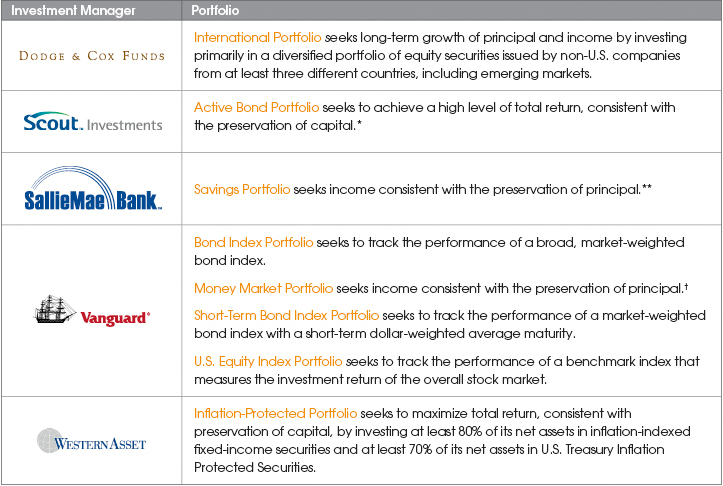
That is a big assumption. Going back to a recent comment is my philosophy of having many ranges of investment choices. The 529 doesn’t really offer much:
image

Overall the 529 is a plan that allows people to throw their money in a fund and than forget about it. I think parents should be more hands on with their money they save which then leads to conversations about money responsibility.

The majority of parents will never to be able to fully fund their children’s college and their’s nothing wrong with that. Big percentage of children will not attend or finish college at all. No one knows what college will be like 20 years down the road in a traditional sense. Save wisely for helping your child in college or with something else they may strive for. Just don’t hand it over to investors to draw a 1% fee for 18 years because it sounds good.

College Enrollment Declines for Second Year in a Row

image

College enrollment declined by close to half a million (463,000) between 2012 and 2013, marking the second year in a row that a drop of this magnitude has occurred. The cumulative two-year drop of 930,000 was larger than any college enrollment drop before the recent recession, according to U.S. Census Bureau statistics from the Current Population Survey released today. The Census Bureau began collecting data on college enrollment in this survey in 1966.

Read the rest here

Numbers from Illinois Teachers Pension Fund

Illinois is a broke state and their teacher pension fund does not make things any easier on how it is contractually written. Yes, it is a contract and the state is honoring the pension as of right now. In the spirit of “States Rights” the voters of Illinois find their financial situation very pallable no matter the current conditions or what they will be facing as the physics of economics plays out. This blog is not making fun of Illinois but it also will not give pity to the residents when debt hell hits.

The Washington Times had a long article showing the ramifacations of this current penson plan that they operate on. I will post the key financial highlights of it while you can read the rest in the embedded link.

About 6,000 retired educators collecting more than $100,000

More than 100,000 retired Illinois educators had been paid back what they invested into the system just 20 months after leaving work

The pension is about $54 billion underfunded

The teacher pension’s 3 percent annual increases aren’t tied to inflation — meaning they cannot fluctuate up or down depending on the economy or budget pressures.

Illinois public sector workers will receive, on average, a $1,906 annual cost of living adjustment this year — nine times more than the average Social Security beneficiary

Indiana Schools Back in Session: Examination of Their Debt

Indiana public schools are swinging into full gear and with that, their financial books are starting to get published in the back pages of your local newspaper. Most of their financial information from a broad spectrum is posted on the state website and can be found in the Department of Education “School Financial Reports” portal.

The debt held by public education has swelled in recent years in municipalities. For numerous years, Indiana school boards were able to pass tax increases and spending agendas without much say from the public. Since 2008 school boards must get these items on a ballot for voters to decide.

Here are some listings of a handful of school corporations around the state and how much “total principal” they owe. Time period covered is July 1, 2012 to June 30, 2013:

Brownsburg $188 Million

Avon $236 Million

Indianapolis Public Schools $642 Million

South Madison Schools $69 Million

Greenwood Community $20 Million

Plainfield Community $127 Million

Greenfield-Central Com Schools $96 Million

Carmel Clay Schools $153 Million

Zionsville Community Schools $200 Million

Fort Wayne Community Schools $133 Million

Rochester Community $13 Million

Seymour Community Schools $22 Million

Vincennes Community $31 Million

Lake Station Community Schools $15 Million

Tell City-Troy Twp School Corp $24 Million

Fremont Community Schools $5 Million

Vigo County School $58 Million

U.S. “Student-to-Teacher” Ratio in Public Schools

If you ever debate public education with people you will sometimes hear the phrase “student-to-teacher” ratio as a source of need for more funding or for better teaching. JustFactsDaily.com released an e-mail with this question and the result may surprise you.

In 2010, according to the U.S. Department of Education, the average student-to-teacher ratio in public schools during 2010 was 16:1.

The National Center for Education Statistics also has information on student to teacher ratio in education.

During the 1970s and early 1980s, public school enrollment decreased, while the number of teachers generally increased. For public schools, the number of pupils per teacher—that is, the pupil/teacher ratio—declined from 22.3 in 1970 to 17.9 in 1985. After enrollment started increasing in 1985, the public school pupil/teacher ratio continued to decline, reaching 17.2 in 1989. After a period of relative stability during the late 1980s through the mid-1990s, the ratio declined from 17.3 in 1995 to 15.4 in 2009. The public school pupil/teacher ratio increased to 16.0 in 2010. By comparison, the pupil/teacher ratio for private schools was estimated at 12.2 in 2010. The average class size in 2007–08 was 20.0 pupils for public elementary schools and 23.4 pupils for public secondary schools.