
Via Wall Street Journal


Via Wall Street Journal

Economic Policies for the 21st Century recently published a lengthy article titled America Should Avoid Germany’s Failed Energy Policy. Found an interesting price comparison of renewable energy vs standard forms.
These problems with green energy help to explain why only 4 percent of U.S. energy comes from wind and solar. Data from the Energy Information Agency show that, for plants entering service in 2019, levelized wind power costs will be between $64 and $175 per megawatt. Solar power will cost between $155 and $195 per megawatt. For comparison, conventional natural gas fired plants produce energy at a levelized cost of $14 per megawatt. Nuclear comes in at $71 per megawatt, comparable with efficient wind farms. The costs to consumers from renewable energy mandates are even higher when tax incentives are included.
While back I posted a piece about the cost associated with the taxpayer caring for illegal immigrant children. Now new dollar amounts have been discovered by Judicial Watch. Sad thing about the bloviating transparency talk from immigrant supporters is this information had to be obtained by an FOIA because the government was unwilling to produce the numbers.
Federal officials paid Baptist Children and Family Services nearly $183 million to help care for 2,400 unaccompanied illegal immigrant children for four months earlier this year at military facilities in Oklahoma and Texas, according to documents made public Wednesday by Judicial Watch.
“The cost to the American taxpayer was $86,846.34 per illegal alien child at Ft. Sill [in Oklahoma], for a total to $104,215,608 for 1,200 UACs from June 12 to October 18,” Judicial Watch said. “The bill also included $2,648,800 in compensation for 30 members of the BCFS ‘Incident Management Team,’ for a total to $88,293 per IMT member for the four-month period.”
The contract was awarded to Baptist Children and Family Services. Here are other items bought by this contract:
“Recreational items will include board games, soccer balls, basket balls, jump ropes, bracelet making kits, yarn, puzzles, arts and crafts, decks of cards, and eye-hand coordination game sets. Reimbursement is requested for $180,000.”
“Educational items will include … tempera paint, paint markers, paint brushes, easel brushes, art paper … Crayons, multicultural crayons … for $180,000.”
“Laptop Kits … 100 Kits … 5 Laptops per kit – $500 per kit … $200,000.”
°“VOIP Phone Kits … 80 kits … 10 cell phones per kit with International call capabilities and radio … $160,000”
H/T Washington Times

Officials with engine maker Cummins Inc. debuted on Wednesday its design for the global distribution business headquarters that it plans to build in the heart of Indianapolis’ downtown.
The building, which will include a 10-story office tower with 15,000 square feet of retail on the first floor and significant public greenspace, will be built on four acres where Market Square Arena previously stood. The property is bounded by Market, Alabama, Washington and New Jersey streets. Cummins agreed to buy the property from the city for $4.3 million.
Read the rest here courtesy of IBJ.com

Via Wall Street Journal
Few years back I was approached by an acquitance to support their run for local office. Coincidentally I had just reviewed some economic news on their budget situation in the town he was running in. The person gave me a beautiful speech about “giving back” and helping the poor. I asked him a direct financial question pertaining to the financial issue he would have to deal with once in office. His look was all I needed to know he had no clue in what I was asking about.
Liz Farmer addresses this question in an article from February 2014 about the impact of municipalities not having people elected with economic knowledge.
In the fall of 2012, the Minneapolis suburb of Vadnais Heights found itself with a credit rating downgraded to junk status. Local leaders in the town of 12,000 were not only insulted, but shocked. Vadnais Heights owed its disgrace to one action it didn’t think was that crucial: It had stopped making bond payments on a $25 million sports complex. The town had expected the complex to meet its borrowing costs through added revenue, but it had fallen short of estimates. So town officials had ceased paying bondholders rather than choosing to bill taxpayers for the unexpected costs.
What is particular events led to misunderstandings of laws?
Failure to understand financial outcomes, even when combined with good faith, is more dangerous to states and localities than it has ever been. Tougher ratings standards are part of the picture, but the problem goes far beyond those. Municipal and state leaders face an entirely new regulatory climate with the passage of the federal Dodd-Frank Wall Street Reform and Consumer Protection Act. That law, which is still being implemented, is bringing increased scrutiny of government financial performance on all levels.
Overall the above situations are not isolated cases. Smaller jurisdictions have issues getting economic competent people into office and usually make decisions on the fly.
I found this quote in the article to be very telling:
“When you think about it, I’m a retired cop and now I’m chairman of a finance committee of a $3 billion organization and the 10th largest city in the nation,” says San Jose, Calif., Councilman Pete Constant. “Can you imagine a corporation taking someone like that and putting them in charge of it with so little experience?”
Economist Mark J. Perry makes this point about Black Friday retail sales:
On Black Friday, avg retailer will make $3.30 in profits per $100 of sales, but the average state/local government’s take will be almost $7

Black Friday saw long lines at Best Buy, Walmart and other retailers. One other business sector stayed swamped that many did not think of: gun dealers. The FBI reported their division that does background checks for gun purchases had to endure 17 work days to keep up with gun purchases on Friday. Here is a report from CNN:
The busiest shopping day of the year also saw a major boom for gun sales, with the federal background check system setting a record of more than 175,000 background checks Friday, according to the FBI.
The staggering number of checks — an average of almost three per second, nearly three times the daily average — falls on the shoulders of 600 FBI and contract call center employees who will endure 17-hour workdays in an attempt to complete the background reviews in three business days, as required by law, FBI spokesman Stephen Fischer said. “Traditionally, Black Friday is one of our busiest days for transaction volume,” Fischer said.
An average of three background checks happened every second. Here is some information on how background checks get denied and some stats on that.
Overall, about 186,000 background checks a year cannot be completed, according to the FBI. It’s difficult to know exactly how many gun sales are authorized from that number because whether to make the sale is ultimately in the hands of the shop owner. Last year, the agency completed 21 million background checks, and about 1.1% of those purchases were denied, the agency said. Firearm background checks have doubled from the more than 9 million conducted when the system was implemented in 1999.
Ten factors can disqualify a purchase: felony conviction, arrest warrant, documented drug problem, mental illness, undocumented immigration status, dishonorable military discharge, renunciation of U.S. citizenship, restraining order, history of domestic violence or indictment for any crime punishable by longer than one year of prison.
Economically speaking today is “The Day” for many retailers to take in massive amounts of revenue from eager holiday shoppers. “Black Friday” has been embedded into the American culture for many decades now. The term itself is hardly ever explored in its origin. I have found one historical explanation via The American Dialect Society:
[From *Public Relations News*, 18 December 1961, p. 2. This weekly
newsletter was published by Denny Griswold of 815 Park Avenue, New
York, NY.]Santa has brought Philadelphia stores a present in the form of “one of
the biggest shopping weekends in recent history.” At the same time,
it has again been proven that there is a direct relationship between
sales and public relations.For downtown merchants throughout the nation, the biggest shopping
days normally are the two following Thanksgiving Day. Resulting
traffic jams are an irksome problem to the police and, in
Philadelphia, it became customary for officers to refer to the
post-Thanksgiving days as Black Friday and Black Saturday. Hardly a
stimulus for good business, the problem was discussed by the merchants
with their Deputy City Representative, Abe S. Rosen, one of the
country’s most experienced municipal PR executives. He recommended
adoption of a positive approach which would convert Black Friday and
Black Saturday to Big Friday and Big Saturday. The media cooperated
in spreading the news of the beauty of Christmas-decorated downtown
Philadelphia, the popularity of a “family-day outing” to the
department stores during the Thanksgiving weekend, the increased
parking facilities, and the use of additional police officers for
guaranteeing a free flow of traffic … Rosen reports that business
over the weekend was so good that merchants are giving downtown
Philadelphia “a starry-eyed new look.”
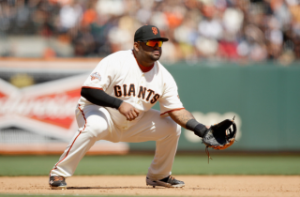
Pablo Sandoval few days ago signed with the Boston Red Sox in a free agent deal for five years and worth $100 Million. Kurt Badenhausen of Forbes wrote why Pablo left San Francisco:
Massachusetts has a flat personal income tax rate of 5.2%. California uses a progressive rate topping out at 13.3% at and above $1 million of income. In other words, 95% of Sandoval’s income would be taxed at this 13.3% rate if he re-signed with the Giants.
The Giants play in the National League West, which boasts three teams from California, including the Giants. This means that in addition to the Giants’ 81 home games, the team plays another 18 road games in California. The Giants also play three road games against their cross-bay rival A’s, bringing their total California games to 103.While Boston has to play ten games next year at the New York Yankees, it also has division opponents in Florida and Canada, where the players will pay no state income taxes (and no federal taxes in Canada).
Baseball players living in no-tax states have about 18.4% of their 2015 salaries sheltered from state taxes due to Spring Training taking place in tax-free states (Arizona does not tax Spring Training days). The Red Sox enjoy an additional 14.3% of tax-sheltered income from road games, while the Giants only get to shelter another 5.8%.
Read the rest here
 Hoosier Econ