Labor Force Participation Rate Drops Again

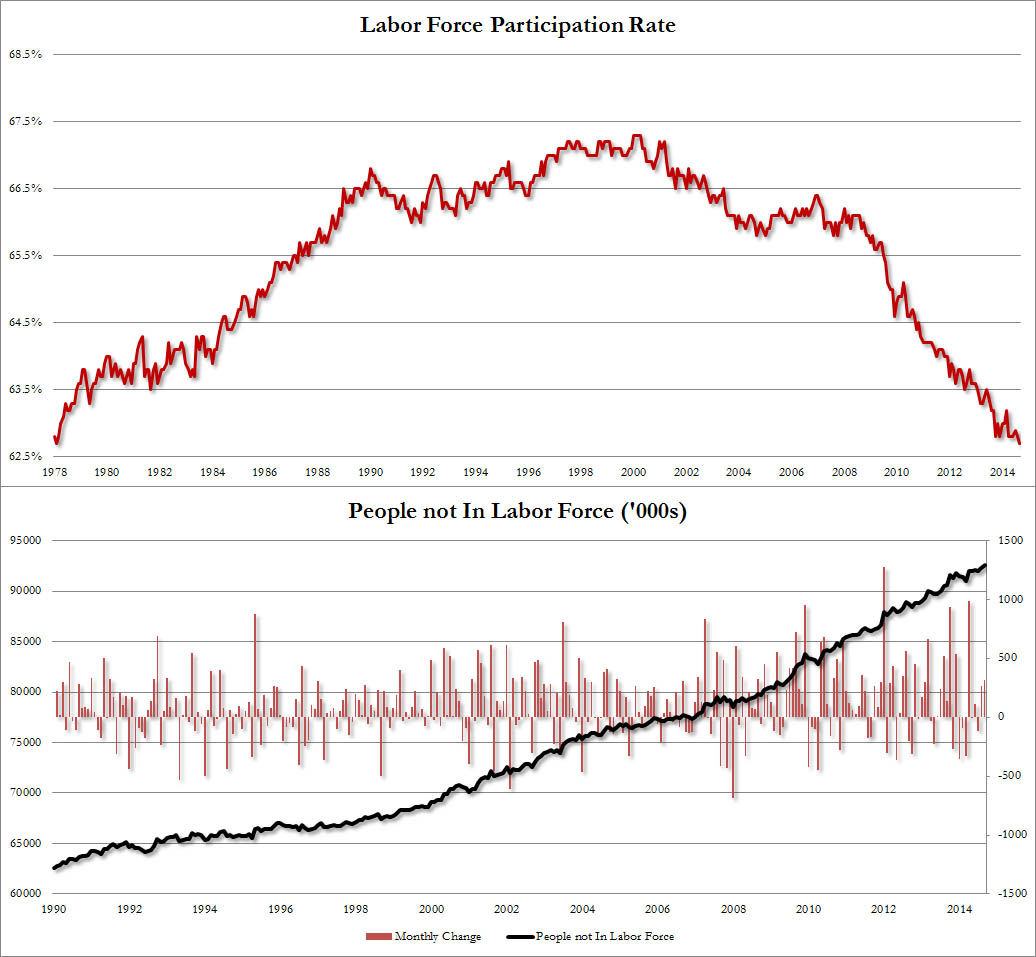
No matter what “great” numbers the federal government puts out about unemployment, one indicator clear thinking investors look at in the health of a nation is labor force participation. Graph is courtesy ZeroHedge.

While by now everyone should know the answer, for those curious why the US unemployment rate just slid once more to a meager 5.9%, the lowest print since the summer of 2008, the answer is the same one we have shown every month since 2010: the collapse in the labor force participation rate, which in September slide from an already three decade low 62.8% to 62.7% – the lowest in over 36 years, matching the February 1978 lows. And while according to the Household Survey, 232K people found jobs, what is more disturbing is that the people not in the labor force, rose to a new record high, increasing by 315,000 to 92.6 million!

participation rate sept 2014

2015 Fiscal Year For U.S. Government Starts Today

The United States federal government starts a new fiscal year today. The President proposed a budget in March but has not worked with the Senate or House in finalizing an actual budget. U.S. federal government spending will occur through later appropriations legislation that is signed into law.

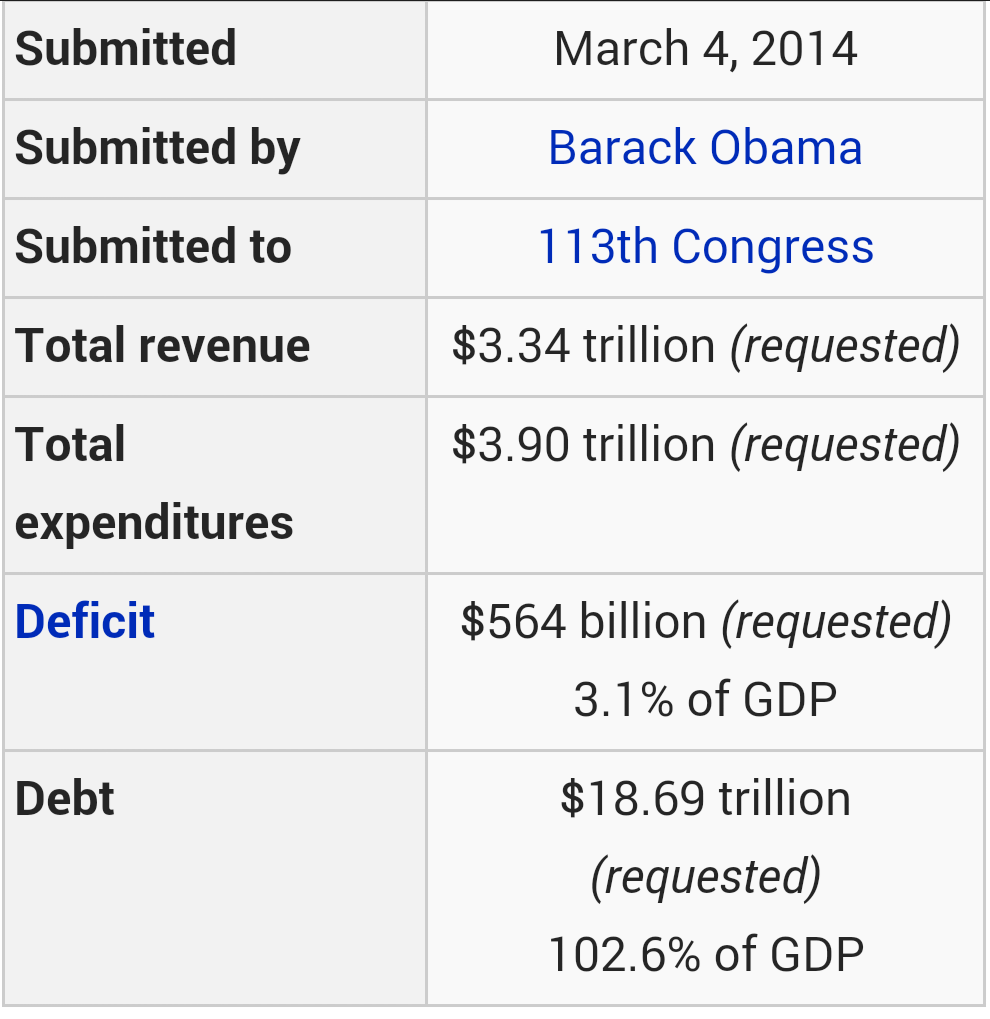
Here’s a snapshot of 2015 proposed spending and tax revenues from the President. Deficits and debt still accumulate at an historical rate.
image

Inflation Hits Five Guys Burgers

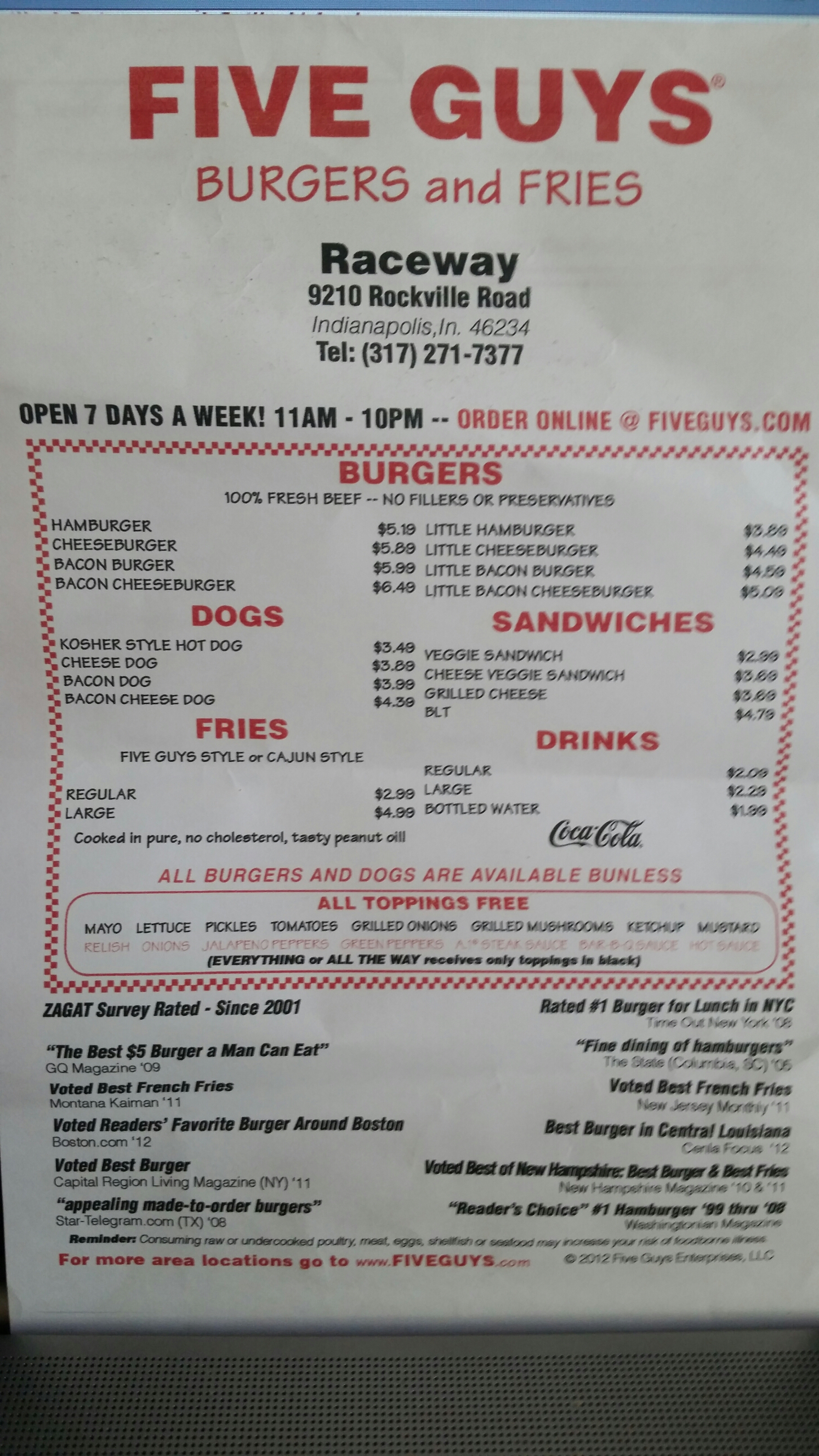
The best indicator of inflation is the prices you pay for everyday goods. I have a saying, the best economist is the consumer. Most consumers will self monitor the prices paid on goods they frequent. The picture below is a 2012 menu from Five Guys Burgers. The address is listed on top of the store location and the date of print is lower right hand corner.
image

I decided to go to the store website of the same address online to compare prices. You can view it yourself here at this link. Here are the price comparisons of 2014 and 2012.

Hamburger $5.79/$5.19 14.4% increase
Cheeseburger $6.49/$5.89 10% increase
Bacon Burger $6.69/$5.99 11.6% increase
Bacon Cheeseburger $7.29/$6.49 12.3% increase

Not all price have gone up. Drinks and fries have stayed the same. Hot dogs and Sandwiches have also increased.

Wal-Mart Now Offers Checking Accounts

walmart
New banking competitor just entered the market as of today. Wal-Mart is now going to offer checking account services in hopes of regaining their customer base that has left for other low dollar competitors.

The monthly membership fee of $8.95 is waived if customers set up direct deposits of at least $500 a month, something that even consumers with subprime credit scores probably would be able to do. Users also may load cash into their accounts at participating stores or deposit checks remotely by taking photos with their smartphones, officials at the Bentonville, Ark., company said Tuesday. A formal announcement of the new push was to be made Wednesday, according to the companies, which said GoBank would be available in most of Wal-Mart’s nearly 4,300 U.S. locations by late October.

Debit cards should be especially appealing to Wal-Mart’s core customers, many of whom do not have traditional banking accounts, Friedman said. The fact that fewer people are struggling to get by these days makes these individuals crucial to the company, he said.

Elimination of overdraft fees will remove a source of income that is huge for traditional retail banks, which typically charge $34 per balance-busting transaction.

GoBank is designed to decline transactions that exceed an account balance, but sometimes larger purchases slip through, Green Dot spokeswoman Sharon Pope said. When that occurs, the account is frozen until the difference is made up out of subsequent deposits, she said.

You can read the rest here at the L.A. Times

Indiana Unemployment Rate Drops Again

Hat Tip Indianapolis political pundit Abdul Hakim-Shabazz

Indiana unemployment rate drops 0.1% to 5.8%.

NASDAQ & Producer/Consumer Price Index News

Here is some economic news I’ve picked up over several days pertaining to the stock market and prices on goods around the country.

About 47 percent of stocks in the Nasdaq Composite Index are down at least 20 percent from their peak in the last 12 months while more than 40 percent have fallen that much in the Russell 2000 Index and the Bloomberg IPO Index.

Here is a breakdown of Producer Prices

The Bureau of Labor Statistics reports that for the 12 months through August, producer prices increased 1.8 percent after rising 1.7 percent in July.

Prices for services related to securities brokerage and dealing fell 4.5 percent in August.

Gasoline index fell 1.4 percent.

Prices for utility natural gas, chicken eggs, diesel fuel, electric power, and raw cotton also moved lower.

The index for potatoes surged 28.0 percent.

Prices for pharmaceutical preparations and jet fuel also advanced.

Consumer Price Index showed decreases and increases as well. I highlighted the bigger jump in food prices jumping with inflation.

Over the last 12 months, the all items index increased 1.7 percent. The energy index fell 2.6 percent, with the gasoline index declining 4.1 percent and the indexes for natural gas
and fuel oil also decreasing.

Food index rose 0.2 percent in August after increasing 0.4 percent in July. The food at home index was also up 0.2 percent. The index for meats, poultry, fish, and eggs rose 1.5 percent in August, the largest increase among the groups. The index for beef and veal rose 4.2 percent, its largest increase since November 2003. The index
for dairy and related products rose 0.6 percent, and the cereals and bakery products index advanced 0.2 percent.

Over the last 12 months, the food at home index has risen 2.9 percent, with the index for meats, poultry, fish and eggs up 8.8 percent.

And finally, picked up an explanation on gas prices stabilizing or decreasing here lately.

The fall in the gasoline index can best be understood in terms of the increased oil productivity in the U.S. OPEC production continues to hover between 36mbd and 38mbd. BUT, non-OPEC output rose to a record 54.8mbd during July. Contributing to that record high is US oil field production, which is soaring and reached almost 9.0mbd in early September. The US is now exporting 3.7mbd of crude oil and petroleum products.

Hat Tip many sources
Updated Federal Government Deficit & Debt

Washington DC political reporter Jamie Dupree released the current financials of the Untied States Government:

Budget deficit in August was $128.7 billion; total deficit so far this fiscal year is $589 billion

Current government debt is
$17,764,720,406,589.08

Inflation at Indiana Cattle Stockyards

Obtained some pricing from a person involved with livestock being brought in and sold at a stockyard in eastern Indiana.

Last week top grade cattle were getting $1.50/lb when brought in for sale. Just six years ago same person said going price was around .50/lb.

Stocking up on meat this winter would not be a bad idea.

IRS Desperation: Taxing Frequent Flyer Miles

Two things about the U.S. government, they are broke and their tax collection agency the IRS will do anything for revenue. This piece of legal news comes via TaxProf Blog:

The Tax Court yesterday required the taxpayer to include $668 in income as reported by Citibank on Form 1099-MISC as the value of an airline ticket received by the taxpayer upon redemption of 50,000 “Thank You Points” from opening a Citibank account. Shankar v. Commissioner, 143 T.C. No. 5 (Aug. 26, 2014).

Housing Market Will Be Very Slow Next Decade

I’ve been seeing some house sales numbers popping up as of late but haven’t really dug into them. This post I’m writing is because I stumbled upon a claim, looked it up and found a trend that maybe reversing……How long Americans stay in their homes they buy. While reading an article from Dave Ramsey on “Homebuyer Mistakes” he had this in the article:

Homeowners stay in their homes an average of just four years, according to the National Association of Realtors.

I found this to be very intriguing and wanted to dig more into this number. First article I found (Longtime Homeowners a Relative Rarity in U. S., Census Shows) dated November 21, 2003. Seems to back up the claim of short ownership of a home.

Although a relative rarity in the United States, where homeowners stay in their homes an average of six years, according to the National Association of Realtors

Now a more recent article I found (Downside of low US mortgage rates? Less selling) written in July of this year shows homeownership economic factors pertaining to the effects of low interest rates caused by in fashion by the Federal Reserve. Shows why the housing market will be very slow the next decade.

More than one-third of homes with a mortgage now have rates below 4 percent, real estate data provider CoreLogic estimates….. As a result, many homeowners with low rates are staying put. Others are moving and buying new homes, but keeping their old ones and renting them. The number of available homes last year was the equivalent of just 4.9 months’ worth of sales, according to the National Association of Realtors.

The big problem of people not being be able to sell is equity issues…..

Another factor is that almost 40 percent of homeowners still don’t have enough equity to enable them to sell. Some are “underwater,” with a mortgage higher than the home’s value. Others may have so little equity that they can’t afford to pay off the sales costs and put a down payment on their next property.

One final note on top of this, many investors and Americans expect interest rates to rise significantly over the next few years. This will be a big pressure on home sales along with the above mentioned.