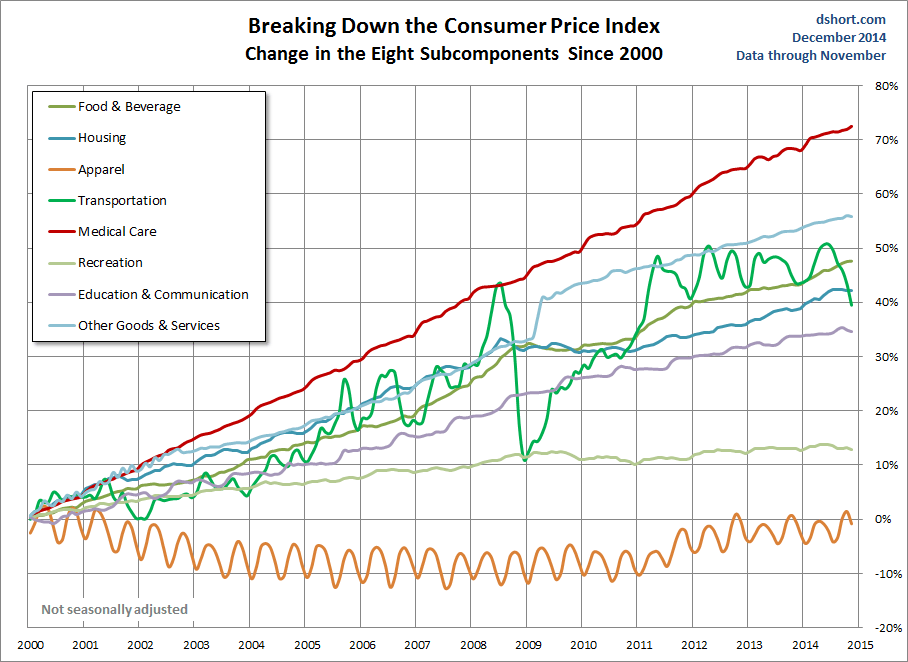
As the Federal Reserve started printing money here is a listing showing how prices took off.
As the Federal Reserve started printing money here is a listing showing how prices took off.
Just Facts Daily posed a question to readers regarding healthcare payments. Here is the question and answer:
What portion of all healthcare spending in the U.S. is directly paid by consumers to healthcare providers (i.e., not indirectly paid through middlemen like insurance companies or governments)?
Less than 25%
In 2009, consumers directly paid for 12% of all healthcare spending in the U.S., as compared to 48% in 1960. This trend has been driven by government policies and is a major factor in the rise of healthcare spending, because it reduces consumers’ incentive to shop for the best value.
With Detroit bankruptcy being approved just a few weeks ago look for many other municipalities and possibly states to use similar methods to fend off economically impossible to meet financial demands.
The next bankruptcy is best captured in the LA Times article entitled “California pension funds are running dry” :
The state’s pension goliath, the California Public Employees’ Retirement System, had $281 billion to cover the benefits promised to 1.3 million workers and retirees in 2013. Yet it needed an additional $57 billion to meet future obligations.
The bill at the state teachers’ pension fund is even higher: It has an estimated shortfall of $70 billion.
Bankruptcy has already happened in some California towns.
Meanwhile, cash-strapped cities are facing escalating bills. Rising pension costs contributed to bankruptcies in Stockton, San Bernardino and Vallejo.
The man behind the transparency movement in California is state Controller John Chiang. He started a website tracking a towns finances for the public to see and it grew from there.

When talking about economic “bubbles” one that is hardly ever mentioned is student loan debt. CreditCards.com had this about the amount of debt:
Debt affects people of all ages, but an explosion of student debt is weighing down this generation of young adults like no other before. According to data from the Federal Reserve, U.S. student loan debt soared from $550 billion in 2007 to nearly $1 trillion by 2013.
An April 2014 Wells Fargo survey reported that 29 percent of millennials (people between 22 and 33 years old) are worried about paying off their student loans, and data from FICO show that the burden of student-loan debts is contributing to a downturn in the number of millennials carrying credit cards.
You can read the rest of the article here.

CNSNews.com is reporting the federal governments 2015 first two fiscal months of tax revenue collected and how much it spent.
The U.S. Treasury continued to rake in tax dollars at a record rate in November as the federal government closed out the first two months of fiscal 2015 with $404,155,000,000 in total receipts, according to the Monthly Treasury Statement released today.
Even with these record revenues, the Treasury ran a deficit of $178.531 billion deficit in October and November as it spent $582.686 billion.
What were the sources of revenue?
The biggest source for the record federal revenue during the two-month period was the individual income tax. It brought in $192,619,000,000 in October and November. The second biggest source was “Social Insurance and Retirement Receipts,” the taxes Americans pay for Social Security and Medicare. These brought in $146,263,000,000.
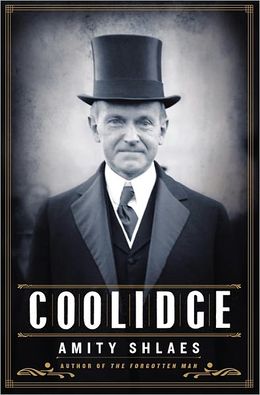
Halfway through reading Amity Shlaes book “Coolidge”. Very detailed and good reference for what the country was politically/economically facing at the time. Here are some economic factors from Calvin Coolidge time period:
Debt after WWI was $27 Billion. Nine times higher than 2 years before.
College professor salaries in 1890 were $2,500. This was 20 times more then tuition. Average American wage earner made $425/year.
1905, home in Massachusetts cost between $2,000-$5,000. Banks did not do mortgages. Building associations did.
1915 IRS employed 4700 people
1920 federal budget was $6.3 Billion and Calvin Coolidge Vice Presidential salary was $12,000.
From 1920 – 1921 Ford Motor Company sold 1.25 million cars.
Few years back I was approached by an acquitance to support their run for local office. Coincidentally I had just reviewed some economic news on their budget situation in the town he was running in. The person gave me a beautiful speech about “giving back” and helping the poor. I asked him a direct financial question pertaining to the financial issue he would have to deal with once in office. His look was all I needed to know he had no clue in what I was asking about.
Liz Farmer addresses this question in an article from February 2014 about the impact of municipalities not having people elected with economic knowledge.
In the fall of 2012, the Minneapolis suburb of Vadnais Heights found itself with a credit rating downgraded to junk status. Local leaders in the town of 12,000 were not only insulted, but shocked. Vadnais Heights owed its disgrace to one action it didn’t think was that crucial: It had stopped making bond payments on a $25 million sports complex. The town had expected the complex to meet its borrowing costs through added revenue, but it had fallen short of estimates. So town officials had ceased paying bondholders rather than choosing to bill taxpayers for the unexpected costs.
What is particular events led to misunderstandings of laws?
Failure to understand financial outcomes, even when combined with good faith, is more dangerous to states and localities than it has ever been. Tougher ratings standards are part of the picture, but the problem goes far beyond those. Municipal and state leaders face an entirely new regulatory climate with the passage of the federal Dodd-Frank Wall Street Reform and Consumer Protection Act. That law, which is still being implemented, is bringing increased scrutiny of government financial performance on all levels.
Overall the above situations are not isolated cases. Smaller jurisdictions have issues getting economic competent people into office and usually make decisions on the fly.
I found this quote in the article to be very telling:
“When you think about it, I’m a retired cop and now I’m chairman of a finance committee of a $3 billion organization and the 10th largest city in the nation,” says San Jose, Calif., Councilman Pete Constant. “Can you imagine a corporation taking someone like that and putting them in charge of it with so little experience?”

Marketwatch.com is reporting Indiana State University is wanting to sell $20 Million in bonds so it can refund outstanding student fee bonds, and to pay costs of issuance. Fitch provided a detailed analysis and gave the university a grade of (AA-). This should make investors feel comfortable when buying the debt. Debt sale is planned for December 8th.
Here is some highlights of the article:
-As of fall 2014, the university had 11 residence halls with total occupancy for 3,660 students and a 99.5% occupancy rate, including the recently completed Reeve Hall.
-Indiana State has over $110 Million in existing bonds due to residence hall and food services upgrades
– the university’s fall enrollment headcount grew to a record high of 13,183 in fall 2014, increasing by 2,649 students (or 25.1%) over fall 2009.
– ISU’s available funds, defined by Fitch as cash and investments not permanently restricted, grew to about $157 million at the close of fiscal 2014, up 5.8% from the prior year and 39.9% from the period since fiscal 2010.

In the United States, the federal government not having enough money for spending is the new normal. One thing that never gets discussed is how the government sells its debt in the form of “bonds”.
What may surprise many is that banks and other financial institutions do it for the government and they are called “Primary Dealers”. Once the government has a certain amount to sell, these dealers take it to market and sell it. Here is the list of dealers:
Bank of Nova Scotia, New York Agency
BMO Capital Markets Corp.
BNP Paribas Securities Corp.
Barclays Capital Inc.
Cantor Fitzgerald & Co.
Citigroup Global Markets Inc.
Credit Suisse Securities (USA) LLC
Daiwa Capital Markets America Inc.
Deutsche Bank Securities Inc.
Goldman, Sachs & Co.
HSBC Securities (USA) Inc.
Jefferies LLC
J.P. Morgan Securities LLC
Merrill Lynch, Pierce, Fenner & Smith Incorporated
Mizuho Securities USA Inc.
Morgan Stanley & Co. LLC
Nomura Securities International, Inc.
RBC Capital Markets, LLC
RBS Securities Inc.
SG Americas Securities, LLC
TD Securities (USA) LLC
UBS Securities LLC
So next time you hear a politician claim banks or financial institutions are evil, they are the ones selling the debt to help that same politician in their spending addiction.

 Hoosier Econ