Education: Money Doesn’t Solve All Problems

Chalkbeat Indiana did an in depth write up pertaining to school funding in Indiana. I’m posting some graphs the author laid out in showing grade scores and performance between IPS and Carmel school systems. IPS is being shown as one of the poorest (families avg $20k/yr) while Carmel is one of the wealthiest (families avg $60k/yr). What makes this fascniating is the school systems are right down the road from each other.

The graphs are self explanatory. The second one shows funding to each school with IPS getting almost $3,000 more per student then Carmel students. The author links that since Carmel residents make more money and have more access to “private tutors” their scores are higher. While that maybe one factor, what this write up does not take into account is the role of having intact families. Two thirds of IPS children live in single parent homes. Carmel has only about 10% single parent homes. An amazing stat that needs to be brought into perspective.

Community Colleges Produce Poor Results

image

In the President’s State of the Union tonight he will unleash another signature plan of throwing money at something. This one is “Free Education” at two year community colleges. That will be a terrible idea and Cato Institute explains why:

Take completion rates. According to the federal Digest of Education Statistics, only 19.5 percent of first-time, full-time students at two-year public schools finish their programs within 150 percent of the time they are slated to take. So less than 20 percent finish a two-year degree within three years, or, say, a 10-month certificate program within 15 months. And that rate has fallen even since 2000, when 23.6 percent of students completed.

That statistic doesn’t change much when you account for student transfers. According to the National Student Clearinghouse Research Center, only 20 percent of community college students transfer to four-year institutions. Four years later, 72 percent of those have completed their degree or remain enrolled. That inches the success rate to roughly 34 percent.

For profit two year programs come with a steeper cost, but more people flock to them then community colleges.

Given the wide price difference, you would expect for-profit schools to be getting their lunch eaten by already dirt-cheap community colleges. They haven’t been. Between 1990 and 2010, for-profit colleges saw much faster enrollment growth than community colleges; 179 percent compared to 44 percent. Why?

There are many reasons, but one seems to be that for-profits are more responsive to students’ needs and desires than community colleges. They appear to offer more flexible scheduling, better focused training and superior student services. They can charge more in part because they provide a better service.


Cato’s write up is in depth and also tackles “the fraud” issue as well. Take a look at the rest of it here.

Indiana Governor Pence Submits 2016 – 2017 Budget

Indiana Governor Mike Pence submitted his budget proposal to the House and Senate for approval. The two bodies will debate the bill and then vote on a final budget at a later date.

I went over to the PDF file the state put out on overall spending areas of the budget. The one big glaring issue is the amount of federal funding the state receives for whatever programs are tied with that. Many people will argue that it captures the money Hoosiers pay in federal taxes and brings it back in the state. In that case, the money shouldn’t leave peoples paychecks at and just have it working economically in the first place.

Here are some budget numbers I found in the proposal. The proposal is for fiscal years 2016/2017:

Both years will cost Hoosier’s around $62 Billion

Education will eat up about 33% of the budget with spending projected at $22.5 Billion

Welfare (Food Stamps, Welfare, Medicaid, etc.) is projected at $28 Billion. $19 Billion of that is sent to Indiana by the Federal government. Start grasping we spend more on welfare then education.

Public Safety spending for the budget cycle is $3 Billion. I know Indiana prisons got more money but expect that to go up throughout the years. Criminals now have to serve 75% of the sentences.

The Governor’s office projected federal funds contributing to the budget for a total of $24.9 Billion.

How Much Food Does it Take to Feed 2 College Football Teams

outback bowl
Outback Steakhouse sponsors the college football bowl game “Outback Bowl”. The Aubrun Tigers take on the Wisconsin Badgers and will be played on January 1, 2015. The two teams meet for dinner sponsored by Outback Steakhouse and here is how much food was there via the Bleacher Report:

Outback Bowl dinner for Auburn & Wisconsin: 750 pounds of steak, 900 lbs. of ribs, 750 lbs. of chicken, 1,600 shrimp, 1,200 lbs. cheese cake.

How Much Do Consumers Pay to Healthcare Providers?

Just Facts Daily posed a question to readers regarding healthcare payments. Here is the question and answer:

What portion of all healthcare spending in the U.S. is directly paid by consumers to healthcare providers (i.e., not indirectly paid through middlemen like insurance companies or governments)?

Less than 25%

In 2009, consumers directly paid for 12% of all healthcare spending in the U.S., as compared to 48% in 1960. This trend has been driven by government policies and is a major factor in the rise of healthcare spending, because it reduces consumers’ incentive to shop for the best value.

California Pension System Imploding

With Detroit bankruptcy being approved just a few weeks ago look for many other municipalities and possibly states to use similar methods to fend off economically impossible to meet financial demands.
The next bankruptcy is best captured in the LA Times article entitled “California pension funds are running dry” :

The state’s pension goliath, the California Public Employees’ Retirement System, had $281 billion to cover the benefits promised to 1.3 million workers and retirees in 2013. Yet it needed an additional $57 billion to meet future obligations.

The bill at the state teachers’ pension fund is even higher: It has an estimated shortfall of $70 billion.

Bankruptcy has already happened in some California towns.

Meanwhile, cash-strapped cities are facing escalating bills. Rising pension costs contributed to bankruptcies in Stockton, San Bernardino and Vallejo.

The man behind the transparency movement in California is state Controller John Chiang. He started a website tracking a towns finances for the public to see and it grew from there.

Purdue Economics Program Top Ranked

Via jconline.com

Add another top national ranking to the Krannert School of Management at Purdue University.
The masters in economics program at Krannert was ranked 13th in the United States by Financial Engineer magazine.
The rankings were based on Graduate Management Admission Test scores, starting salary and bonus, undergraduate GPA, acceptance rate, full-time graduates employed at graduation, and full-time graduates employed three months after graduation.

College Student Loan Debt Exploding

image

When talking about economic “bubbles” one that is hardly ever mentioned is student loan debt. CreditCards.com had this about the amount of debt:

Debt affects people of all ages, but an explosion of student debt is weighing down this generation of young adults like no other before. According to data from the Federal Reserve, U.S. student loan debt soared from $550 billion in 2007 to nearly $1 trillion by 2013.

An April 2014 Wells Fargo survey reported that 29 percent of millennials (people between 22 and 33 years old) are worried about paying off their student loans, and data from FICO show that the burden of student-loan debts is contributing to a downturn in the number of millennials carrying credit cards.

You can read the rest of the article here.

Is the Indiana 529 College Choice Plan Worth It?

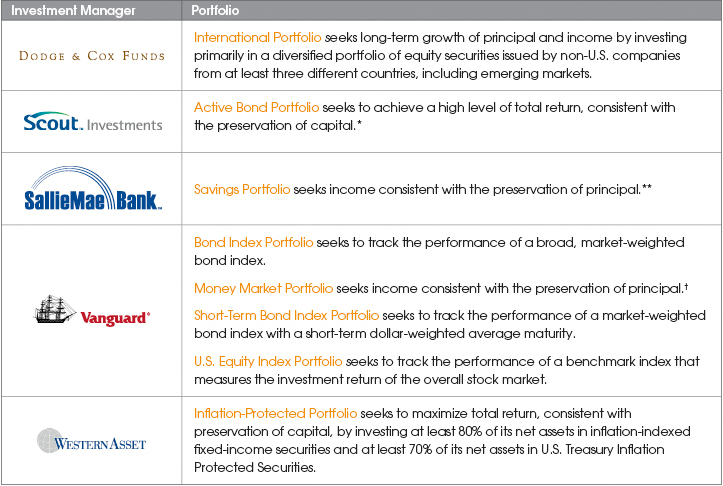
For many months now I’ve been hearing and seeing commercials for a program geared towards parents that helps them save for college. The program is called the COLLEGE CHOICE 529 INVESTMENT PLAN. Per Indiana Department of Education website:

The program allows Hoosiers to plan for their children’s or loved one’s future, making contributions into an investment account for higher education expenses. Indiana also enacted a tax credit that makes the CollegeChoice Plan an even better option.

You are directed out of the state website and to a place called College Choice Advisor. To be very brief, this is the site where you sign up an account and it gives you investment options for saving /giving. That is the key component of why I think a program like this is unnecessary…..investing. Parents can easily do this on their own with more options. This website really doesn’t offer a variety like you could get with a local advisor or you’re own research.
The investing assumptions they provide are very broad and unrealistic in today’s income reality a lot of people are living in. Per the website:

If an investor opened a 529 account with an initial investment of $2,500 and contributed $100 every month for 18 years, there could be over $6,300 more for a qualified withdrawal than the same investment in a taxable account.*

There is a reason for an asterisk at the end of that statement:

Assumptions: $2,500 initial investment with subsequent monthly investments of $100 for a period of 18 years; annual rate of return on investment of 5% and no funds withdrawn during the time period specified; and taxpayer is in the 30% federal income tax bracket for all options at the time of contributions and distribution. This hypothetical is for illustrative purposes only.

That is a big assumption. Going back to a recent comment is my philosophy of having many ranges of investment choices. The 529 doesn’t really offer much:
image

Overall the 529 is a plan that allows people to throw their money in a fund and than forget about it. I think parents should be more hands on with their money they save which then leads to conversations about money responsibility.

The majority of parents will never to be able to fully fund their children’s college and their’s nothing wrong with that. Big percentage of children will not attend or finish college at all. No one knows what college will be like 20 years down the road in a traditional sense. Save wisely for helping your child in college or with something else they may strive for. Just don’t hand it over to investors to draw a 1% fee for 18 years because it sounds good.

Economics & “Coolidge”

image

Halfway through reading Amity Shlaes book “Coolidge”. Very detailed and good reference for what the country was politically/economically facing at the time. Here are some economic factors from Calvin Coolidge time period:

Debt after WWI was $27 Billion. Nine times higher than 2 years before.

College professor salaries in 1890 were $2,500. This was 20 times more then tuition. Average American wage earner made $425/year.

1905, home in Massachusetts cost between $2,000-$5,000. Banks did not do mortgages. Building associations did.

1915 IRS employed 4700 people

1920 federal budget was $6.3 Billion and Calvin Coolidge Vice Presidential salary was $12,000.

From 1920 – 1921 Ford Motor Company sold 1.25 million cars.