Indiana Farm Sale Blowout: $16,200 Per Acre

image

Via Indiana Economic Digest

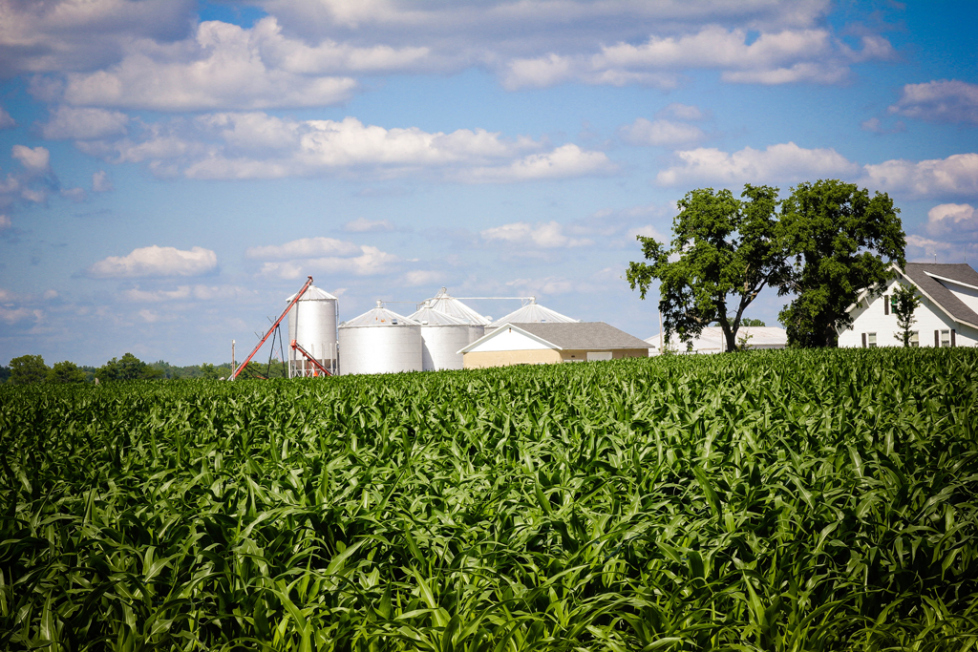
Elliott Farm sells at $16,200 per acre
Elliott Farm, located near Poseyville, recently sold its 69 acres at auction for $16,200 per acre, or $1,117,800 in total.

The farm had been held by the Elliott Family since the early 1940s and was purchased by a local farmer who was represented by proxy. According to auctioneer Andrew Wilson, the price per acre is a record for this area

Are Pork Prices About to Become Cheaper?

In January I blogged about hog numbers expanding. Now more expansion has happened within the state and nationally. That is good news on the supply side which hopefully equates to some lower prices.

Here is more from HoosierAgToday.com

Indiana’s total hog and pig inventory on March 1 was estimated at 3.65 million head, up 300,000 head from a year ago, according to Greg Matli, State Statistician, of the USDA, NASS, Indiana Field Office.

United States inventory of all hogs and pigs on March 1, 2015 was 65.9 million head. This was up 7 percent from March 1, 2014, but down slightly from December 1, 2014. Breeding inventory, at 5.98 million head, was up 2 percent from last year, and up 1 percent from the previous quarter.

USDA: 97% of Farms Owned by Families

image
USDA came out with some new numbers on who owns farms in America:

About 2.1 million farms in the U.S., 97 percent are what the report calls “family farms,”according to the the USDA’s 2012 Census of Agriculture Farm Typology.

Other key facts included in the report stated that 88 percent of those 2.1 million farms are classified as “small family farms” — operations with a gross cash farm income (GCFI) of less than $350,000 per year. Those small family farms contribute nearly 60 percent of all direct sales of product from farms to consumers.

H/T Indiana Economic Digest

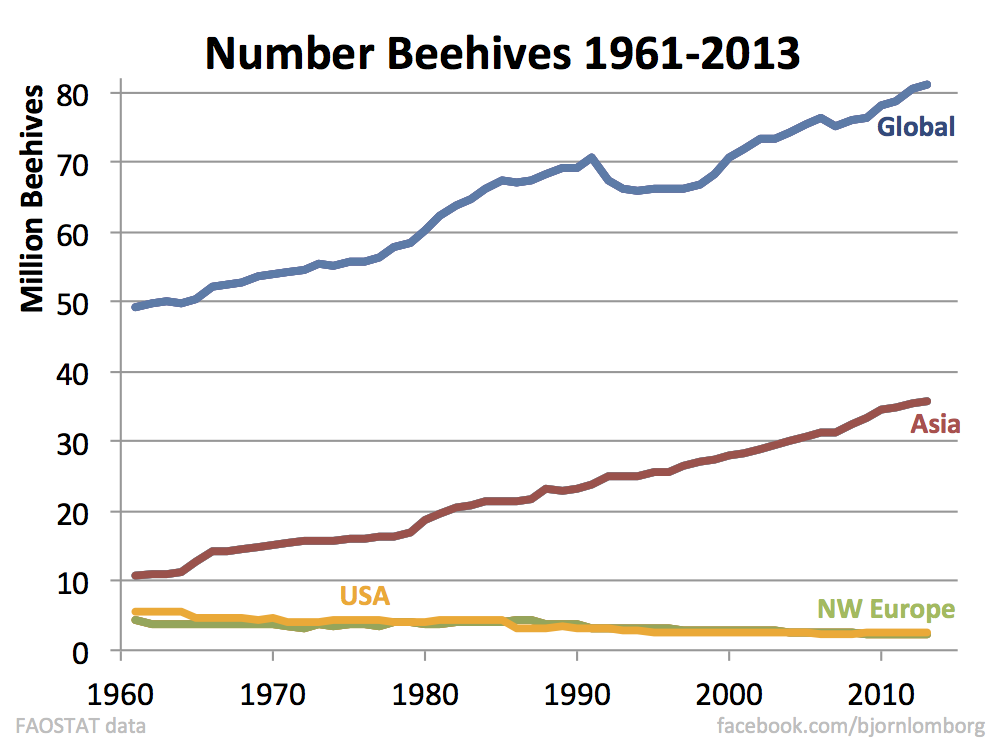
Bee Hives Are Not Dying Globally

image

You can read the rest via Bjorn Lomborg Facebook page.

U.S. Farmers Are Exceptional

image

Kokomo Tribune writer Josh Sigler provided a good investment piece about why farming is an excellent investment. I blog about farmers and farming because the lack of respect towards the industry by people is simply naive. Here’s a snippet of the article that should give the world pause in how exceptional farmers in the United States are:

In 1928, the world’s population was 1.2 billion people. The United States made up 10 percent of that population, and at the same time, provided 10 percent of the world’s agricultural output.

By 1968, the world’s population had ballooned to 3.5 billion. The U.S. made up 6 percent of the world’s population, but increased its agricultural output, providing 20 percent of the world’s crops, doubling the output in 40 years.

Those numbers continued along the same path, and by 2012, the world’s population rose to over 7 billion. The U.S. now makes up 3 percent of the world’s population, but in modern times, produces 30 percent of the world’s agricultural output.

The world has a long way to go in catching up to the United States.

H/T Indiana Economic Digest

U.S. Beef Herds Will Expand in 2015

image

One area of economic data I follow is where corn is being sold to. Recent data has pointed to farmers raising cattle which means an expanding beef market. I did some research and found this forecast at FarmandDairy.com:

U.S. Department of Agriculture semiannual report that cattle numbers have increased by slightly more than 1 percent following seven years of decline.
The most significant expansion has been in beef cows, which were up 2 percent from the previous year, the USDA said.
There were 610,000 new beef cows added nationally. Hurt said the expansion is likely to continue through most of this decade.


One reason for the expansion is prices farmers are getting for beef:

“These were led by record-high cattle prices in 2014 with finished cattle averaging near $155 per live hundredweight and Oklahoma 500-550 pound steer calves averaging $250,” Hurt said.

Farmers Buying Most of the Farmland for Sale in 2014

image

Stumbled upon some interesting data about buyers of farmland while researching farmland value. This comes from AgriNews:

One thing they have noticed, Aupperle said, is that more farmers are purchasing the land. During the first nine months of the year, 71 percent of the land was purchased by farmers or their families.

“Farming community has really stepped up, while outside investors seem to be waiting to see if a correction comes,” Aupperle said. “The farming community has a lot of money from remaining steady for two years and when investors come back, an upward trend should continue.

2014 Corn & Soybean Yields Explode

corn harvest
Harvest season is wrapping up across the nation. Here is some Indiana and national stats gathered up from various sources around the internet:

Corn for grain production will set a new record in 2014 at 14.5 billion bushels on fewer acres planted compared to 2013. World corn production is also setting new records.

Soybean farmers are now expected to harvest 3.96 billion bushels, up 31 million bushels from the October estimate. Fifteen states including Indiana, Missouri and South Dakota are expected to report records for the amount of soybeans grown per acre with the average yield at 47.5 bushels per acre. Area for harvest in the United States is forecast at a record 83.4 million acres, unchanged from last month.

(Indiana) Corn yield was unchanged from last month’s projection of 186 bushels per acre. This will be a record corn yield for Indiana if realized. Corn for grain harvested acres was 5.75 million acres. Total production is still expected to weigh in at a record-breaking 1.07 billion bushels. Soybean yield at 54.0 bushels per acre was unchanged from last month’s forecast. This yield if realized will be a record for soybean yield in Indiana. The soybean harvest is anticipated to rake in 296 million bushels, which would make 2014 a record production year.

H/T Hoosieragtoday.com for recent numbers

Indiana Corn Harvest Begins

Hoosier Ag interviewed  Dan Emmert, field agronomist with DuPont Pioneer and he reported the following:

Harvesting has begun and early yields look good. Emmert says several fields along the Ohio river have been harvested, “Only the guys who are comfortable harvesting corn at around 20% are willing to start this early.” He expects most growers in SW Indiana to begin to work fields in about 3 weeks.

USDA Soybean and Corn Numbers

USDA released a lot of numbers on July 11th pertaining to farming conditions in the United States. A lot of numbers were thrown out today, but Indiana is now exporting both corn/soybean around the world in bigger numbers compared to ten years ago. USDA projected nice yields this year (Corn 165.3 bpa and Soybeans 45.2 bpa) but in reality this should come with major warning labels. Heavy rains in the cornbelt in June(beginning of pollination) have mostly meant lower yields come harvest.

Soybean production is projected at a record 3,800 million bushels, up 165 million due to increased harvested area. Harvested area, forecast at 84.1 million acres in the June 30 Acreage report, is 3.6 million above the June forecast. The soybean yield is projected at 45.2 bushels per acre, unchanged from last month. Soybean supplies are 180 million bushels above last month’s forecast due to higher beginning stocks and production. Soybean crush is projected at 1,755 million bushels, up 40 million reflecting increased domestic soybean meal disappearance in line with adjustments for 2013/14 and higher

Corn production is projected 75 million bushels lower based on harvested acres from the June 30 Acreage report. The national average corn yield remains projected at a record 165.3 bushels per acre. Favorable early July crop conditions and weather support an outlook for record yields across most of the Corn Belt, however, for much of the crop, the critical pollination period will be during middle and late July. At the projected 13,860 million bushels, this year’s crop remains just 65 million bushels below last year’s record.