More Proof Student Loan Debt Will Crash in the Future

Robert Wenzel over at EconomicPolicyJournal.com posted two impressive charts which defy the reality of economics and shows the coming student loan debt bubble will be a hard crash when it happens. Biggest reason student debt is skyrocketing is because most student loans are financed by the federal government. Unfortunately the only ideas being floated is more government intervention.

First chart is the mega growth of student loans compared to other loans in the economy
student loans 1

Another chart he posted shows that only 29% of people paying off student debts and the principle is going down.
student loans 2

Walmart Expanding on College Campuses

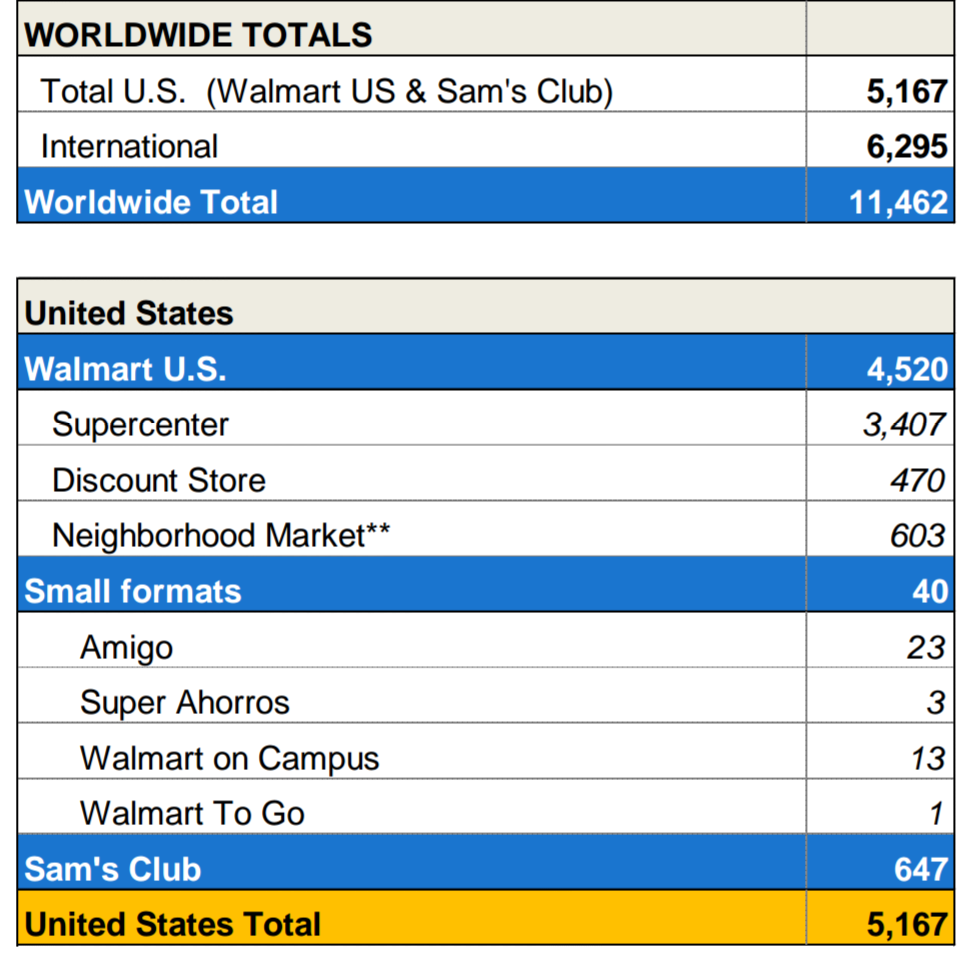
I took a look at some Walmart store expansion numbers to see where the company is expanding. This is current data from February 2015.

First lets go overseas where they are ramping up in South Africa

image

The current U.S. data is where I found the college campus expansion numbers.

image

Here is more about the recent growth on college campuses via INSIDE Higher Ed

In January 2011, Walmart opened its first location on a university campus at the University of Arkansas at Fayetteville, a half-hour drive from its corporate headquarters. Now, Walmart has announced that it will be opening a second campus location, at Arizona State University, with luck by May, according to Delia Garcia, a Walmart spokeswoman. A third location, at Georgia Tech, is slated to open at a to-be-determined time next year. “Walmart on campus is an opportunity to bring low prices to students, reach new customers and serve our on-campus customers in a convenient way,” Garcia said in an interview.

Inflation Alert: College Textbooks

college textbooks

Recent data compiled is showing college textbooks are rising at a double digit rate. The National Association of College Stores has price comparisons on new textbooks college students buy.

    Average Price of New Books
    2007: $56
    2015: $72
    Price increase of 22%

Here are some other stats concerning college students and textbooks

    Average student spending for a semester of course materials
    $509

    Average college bookstore profit margin for a new book
    21.1%

    Percent of students who buy their books at their college bookstore
    47%

    Percent of students who say they have skipped buying a textbook because it was too expensive
    65%

H/T StatisticBrain.com

Inflation Alert: Notre Dame Tuition

image

Univeristy of Notre Dame is raising their tuition again. Get ready to pay according to the Indianapolis Star:

The University of Notre Dame is raising undergraduate tuition by 3.7 percent to $47,929 next school year.

The university says with average room and board rates of $13,846, the annual cost of attending Notre Dame will be $61,775.

The school said the 3.7 percentage increase in tuition and fees is the lowest at Notre Dame since there was no increase in 1960. Tuition had increased 3.8 percent for three straight years.

For the “there is no inflation” crowd, in just the last four years tuition has now increased 15.1%.

Cost of Political Correctness

This is just one example of political correctness having an actual cost associated with it. Story courtesy of College Fix:

PUBLIC UNIVERSITY SPENDS $16K ON CAMPAIGN TO WARN STUDENTS TO WATCH WHAT THEY SAY

‘Inclusive Language Campaign’ debuts at University of Michigan

Dozens of posters plastered across the University of Michigan caution students not to say things that might hurt others’ feelings, part of a new “Inclusive Language Campaign” at the state’s flagship public university that cost $16,000 to implement.

Words declared unacceptable through the campaign include “crazy,” “insane,” “retarded,” “gay,” “tranny,” “gypped,” “illegal alien,” “fag,” “ghetto” and “raghead.” Phrases such as “I want to die” and “that test raped me” are also verboten.

University spokesman Rick Fitzgerald told The College Fix in an email the campaign aims to “address campus climate by helping individuals understand that their words can impact someone and to encourage individuals to commit to creating a positive campus community.”

You can read the rest here.

Colleges Dealing with Unprepared Students

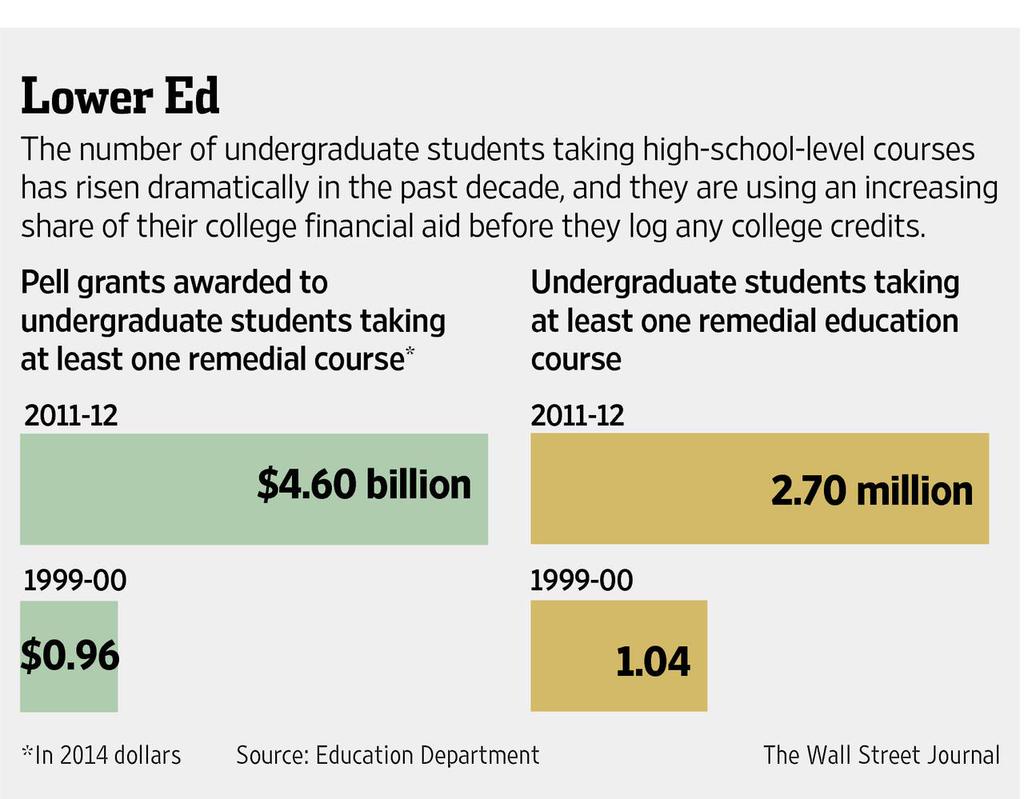
Wall Street Journal is showing a growing trend of high school students entering college still needing remedial help.
In the last 12 years, students needing at least one remedial course has risen 160%.

image

Community Colleges Produce Poor Results

image

In the President’s State of the Union tonight he will unleash another signature plan of throwing money at something. This one is “Free Education” at two year community colleges. That will be a terrible idea and Cato Institute explains why:

Take completion rates. According to the federal Digest of Education Statistics, only 19.5 percent of first-time, full-time students at two-year public schools finish their programs within 150 percent of the time they are slated to take. So less than 20 percent finish a two-year degree within three years, or, say, a 10-month certificate program within 15 months. And that rate has fallen even since 2000, when 23.6 percent of students completed.

That statistic doesn’t change much when you account for student transfers. According to the National Student Clearinghouse Research Center, only 20 percent of community college students transfer to four-year institutions. Four years later, 72 percent of those have completed their degree or remain enrolled. That inches the success rate to roughly 34 percent.

For profit two year programs come with a steeper cost, but more people flock to them then community colleges.

Given the wide price difference, you would expect for-profit schools to be getting their lunch eaten by already dirt-cheap community colleges. They haven’t been. Between 1990 and 2010, for-profit colleges saw much faster enrollment growth than community colleges; 179 percent compared to 44 percent. Why?

There are many reasons, but one seems to be that for-profits are more responsive to students’ needs and desires than community colleges. They appear to offer more flexible scheduling, better focused training and superior student services. They can charge more in part because they provide a better service.


Cato’s write up is in depth and also tackles “the fraud” issue as well. Take a look at the rest of it here.

How Much Food Does it Take to Feed 2 College Football Teams

outback bowl
Outback Steakhouse sponsors the college football bowl game “Outback Bowl”. The Aubrun Tigers take on the Wisconsin Badgers and will be played on January 1, 2015. The two teams meet for dinner sponsored by Outback Steakhouse and here is how much food was there via the Bleacher Report:

Outback Bowl dinner for Auburn & Wisconsin: 750 pounds of steak, 900 lbs. of ribs, 750 lbs. of chicken, 1,600 shrimp, 1,200 lbs. cheese cake.

College Student Loan Debt Exploding

image

When talking about economic “bubbles” one that is hardly ever mentioned is student loan debt. CreditCards.com had this about the amount of debt:

Debt affects people of all ages, but an explosion of student debt is weighing down this generation of young adults like no other before. According to data from the Federal Reserve, U.S. student loan debt soared from $550 billion in 2007 to nearly $1 trillion by 2013.

An April 2014 Wells Fargo survey reported that 29 percent of millennials (people between 22 and 33 years old) are worried about paying off their student loans, and data from FICO show that the burden of student-loan debts is contributing to a downturn in the number of millennials carrying credit cards.

You can read the rest of the article here.

Is the Indiana 529 College Choice Plan Worth It?

For many months now I’ve been hearing and seeing commercials for a program geared towards parents that helps them save for college. The program is called the COLLEGE CHOICE 529 INVESTMENT PLAN. Per Indiana Department of Education website:

The program allows Hoosiers to plan for their children’s or loved one’s future, making contributions into an investment account for higher education expenses. Indiana also enacted a tax credit that makes the CollegeChoice Plan an even better option.

You are directed out of the state website and to a place called College Choice Advisor. To be very brief, this is the site where you sign up an account and it gives you investment options for saving /giving. That is the key component of why I think a program like this is unnecessary…..investing. Parents can easily do this on their own with more options. This website really doesn’t offer a variety like you could get with a local advisor or you’re own research.
The investing assumptions they provide are very broad and unrealistic in today’s income reality a lot of people are living in. Per the website:

If an investor opened a 529 account with an initial investment of $2,500 and contributed $100 every month for 18 years, there could be over $6,300 more for a qualified withdrawal than the same investment in a taxable account.*

There is a reason for an asterisk at the end of that statement:

Assumptions: $2,500 initial investment with subsequent monthly investments of $100 for a period of 18 years; annual rate of return on investment of 5% and no funds withdrawn during the time period specified; and taxpayer is in the 30% federal income tax bracket for all options at the time of contributions and distribution. This hypothetical is for illustrative purposes only.

That is a big assumption. Going back to a recent comment is my philosophy of having many ranges of investment choices. The 529 doesn’t really offer much:
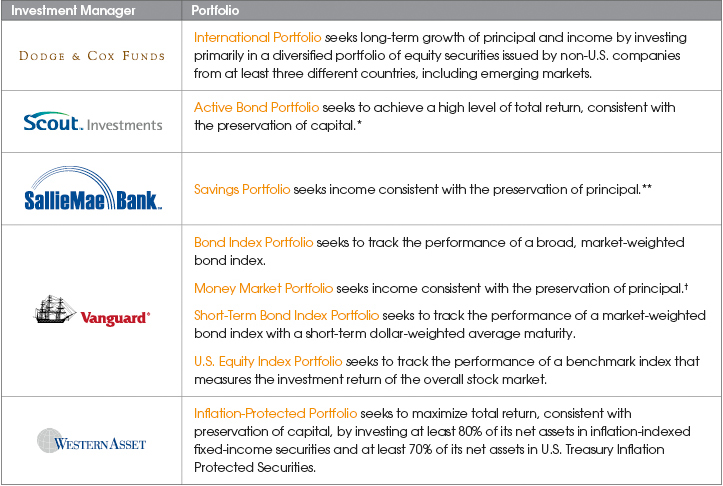
image

Overall the 529 is a plan that allows people to throw their money in a fund and than forget about it. I think parents should be more hands on with their money they save which then leads to conversations about money responsibility.

The majority of parents will never to be able to fully fund their children’s college and their’s nothing wrong with that. Big percentage of children will not attend or finish college at all. No one knows what college will be like 20 years down the road in a traditional sense. Save wisely for helping your child in college or with something else they may strive for. Just don’t hand it over to investors to draw a 1% fee for 18 years because it sounds good.