NCAA & TV Ad Revenue from March Madness

march madness

The NCAA Basketball Tournament kicks off in a few days. As America tunes in to watch the games the NCAA will watch their bank coffers fill up. How much does the NCAA make each year during tournament time. According to Andrew Zimbalist, an economics professor at Smith College, hundreds of millions:

    “The institution itself that’s based in Indianapolis, makes money primarily through television rights to the March Madness basketball tournament. They get somewhere in the neighborhood of $770 million dollars a year. That constitutes around 90% of all of the revenue that goes to the NCAA,”


Television stations are more then willing to pay that type of money to the NCAA for rights to air the games. Here is their ad revenue from 2013:

    Over the past decade (2004-2013), the NCAA men’s basketball tournament has triggered more than $6.88 billion of national TV ad spending from 269 different marketers. Ad revenue in 2013 was $1.15 billion, up 3.8 percent from the prior year.

Number of Indiana Children Receiving School Vouchers

school

Here is the most recent data by the state of Indiana showing children receiving school vouchers-

This school year, 29,148 students received vouchers, or 2.6 percent of the total state student population, according to the Choice Scholarship program’s annual report released in February. IDOE paid those private and Christian schools nearly $116 million in the 2014-15 school year.

Indiana Teacher Union Membership Up

Indiana teacher unions have gained some members since their big drop off in 2011. EAGnews.org first reported numbers in 2012:

According to internal sources at the Indiana State Teachers Association, membership has dropped by more than 20 percent – from 50,032 in 2010-11 to 39,922 in 2011-12.


The ISTA (Indiana State Teachers Association) now boasts membership at 45,000 which means membership has gone up.

Some districts are still losing union membership. Tippecanoe School District, gave a glimpse in how much the drop off is. Reporting via jconline.com:

The Lafayette Education Association saw a 17 percent drop in the past four school years; membership decreased from 400 members, or 67 percent of Lafayette School Corp. teachers, in September 2011 to 332 members, or 56 percent of teachers, in September 2014.

The Tippecanoe Education Association saw a 26 percent drop during that same time period — dropping from 420 members, or 67 percent of Tippecanoe School Corp. teachers, to 310 members, or 46 percent.

Nationally union membership has dropped double digits the last 30 years.

In 2014, about 49 percent of teachers — or about 2.5 million — were union members. That’s down from 53 percent just a decade ago, according to the federal Bureau of Labor Statistics. In 1984, teachers union coverage was at 64 percent.

Cost of Political Correctness

This is just one example of political correctness having an actual cost associated with it. Story courtesy of College Fix:

PUBLIC UNIVERSITY SPENDS $16K ON CAMPAIGN TO WARN STUDENTS TO WATCH WHAT THEY SAY

‘Inclusive Language Campaign’ debuts at University of Michigan

Dozens of posters plastered across the University of Michigan caution students not to say things that might hurt others’ feelings, part of a new “Inclusive Language Campaign” at the state’s flagship public university that cost $16,000 to implement.

Words declared unacceptable through the campaign include “crazy,” “insane,” “retarded,” “gay,” “tranny,” “gypped,” “illegal alien,” “fag,” “ghetto” and “raghead.” Phrases such as “I want to die” and “that test raped me” are also verboten.

University spokesman Rick Fitzgerald told The College Fix in an email the campaign aims to “address campus climate by helping individuals understand that their words can impact someone and to encourage individuals to commit to creating a positive campus community.”

You can read the rest here.

Colleges Dealing with Unprepared Students

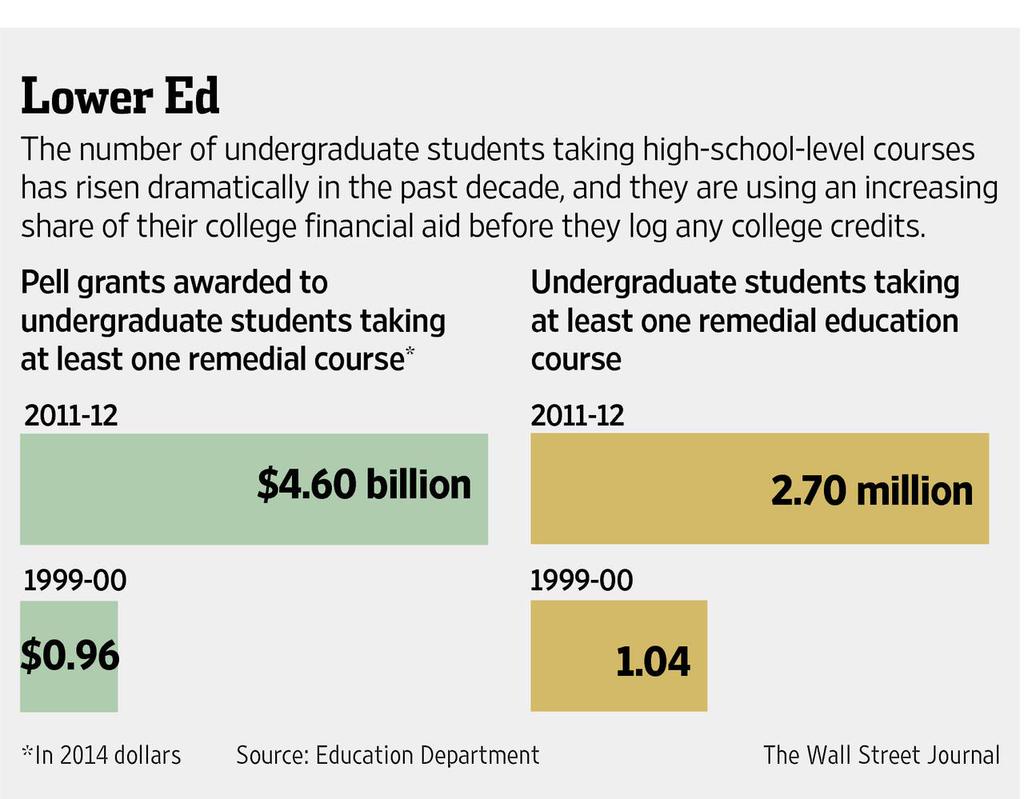
Wall Street Journal is showing a growing trend of high school students entering college still needing remedial help.
In the last 12 years, students needing at least one remedial course has risen 160%.

image

Education: Money Doesn’t Solve All Problems

Chalkbeat Indiana did an in depth write up pertaining to school funding in Indiana. I’m posting some graphs the author laid out in showing grade scores and performance between IPS and Carmel school systems. IPS is being shown as one of the poorest (families avg $20k/yr) while Carmel is one of the wealthiest (families avg $60k/yr). What makes this fascniating is the school systems are right down the road from each other.

The graphs are self explanatory. The second one shows funding to each school with IPS getting almost $3,000 more per student then Carmel students. The author links that since Carmel residents make more money and have more access to “private tutors” their scores are higher. While that maybe one factor, what this write up does not take into account is the role of having intact families. Two thirds of IPS children live in single parent homes. Carmel has only about 10% single parent homes. An amazing stat that needs to be brought into perspective.

Community Colleges Produce Poor Results

image

In the President’s State of the Union tonight he will unleash another signature plan of throwing money at something. This one is “Free Education” at two year community colleges. That will be a terrible idea and Cato Institute explains why:

Take completion rates. According to the federal Digest of Education Statistics, only 19.5 percent of first-time, full-time students at two-year public schools finish their programs within 150 percent of the time they are slated to take. So less than 20 percent finish a two-year degree within three years, or, say, a 10-month certificate program within 15 months. And that rate has fallen even since 2000, when 23.6 percent of students completed.

That statistic doesn’t change much when you account for student transfers. According to the National Student Clearinghouse Research Center, only 20 percent of community college students transfer to four-year institutions. Four years later, 72 percent of those have completed their degree or remain enrolled. That inches the success rate to roughly 34 percent.

For profit two year programs come with a steeper cost, but more people flock to them then community colleges.

Given the wide price difference, you would expect for-profit schools to be getting their lunch eaten by already dirt-cheap community colleges. They haven’t been. Between 1990 and 2010, for-profit colleges saw much faster enrollment growth than community colleges; 179 percent compared to 44 percent. Why?

There are many reasons, but one seems to be that for-profits are more responsive to students’ needs and desires than community colleges. They appear to offer more flexible scheduling, better focused training and superior student services. They can charge more in part because they provide a better service.


Cato’s write up is in depth and also tackles “the fraud” issue as well. Take a look at the rest of it here.

Indiana Governor Pence Submits 2016 – 2017 Budget

Indiana Governor Mike Pence submitted his budget proposal to the House and Senate for approval. The two bodies will debate the bill and then vote on a final budget at a later date.

I went over to the PDF file the state put out on overall spending areas of the budget. The one big glaring issue is the amount of federal funding the state receives for whatever programs are tied with that. Many people will argue that it captures the money Hoosiers pay in federal taxes and brings it back in the state. In that case, the money shouldn’t leave peoples paychecks at and just have it working economically in the first place.

Here are some budget numbers I found in the proposal. The proposal is for fiscal years 2016/2017:

Both years will cost Hoosier’s around $62 Billion

Education will eat up about 33% of the budget with spending projected at $22.5 Billion

Welfare (Food Stamps, Welfare, Medicaid, etc.) is projected at $28 Billion. $19 Billion of that is sent to Indiana by the Federal government. Start grasping we spend more on welfare then education.

Public Safety spending for the budget cycle is $3 Billion. I know Indiana prisons got more money but expect that to go up throughout the years. Criminals now have to serve 75% of the sentences.

The Governor’s office projected federal funds contributing to the budget for a total of $24.9 Billion.

Purdue Economics Program Top Ranked

Via jconline.com

Add another top national ranking to the Krannert School of Management at Purdue University.
The masters in economics program at Krannert was ranked 13th in the United States by Financial Engineer magazine.
The rankings were based on Graduate Management Admission Test scores, starting salary and bonus, undergraduate GPA, acceptance rate, full-time graduates employed at graduation, and full-time graduates employed three months after graduation.

College Student Loan Debt Exploding

image

When talking about economic “bubbles” one that is hardly ever mentioned is student loan debt. CreditCards.com had this about the amount of debt:

Debt affects people of all ages, but an explosion of student debt is weighing down this generation of young adults like no other before. According to data from the Federal Reserve, U.S. student loan debt soared from $550 billion in 2007 to nearly $1 trillion by 2013.

An April 2014 Wells Fargo survey reported that 29 percent of millennials (people between 22 and 33 years old) are worried about paying off their student loans, and data from FICO show that the burden of student-loan debts is contributing to a downturn in the number of millennials carrying credit cards.

You can read the rest of the article here.