United States Government YTD Interest on Debt Payments

The U.S Federal Government makes monthly payments on “interest on debt” to its lenders that they borrowed money from. The payments do not include paying down the principle.

For the month of June 2014, $97,565,768,696 was paid out with YTD total now at $354,863,250,628. There are still 3 fiscal months left for 2014 of the U.S. government.

Source – United States Treasury Department

Indiana’s Neighbor Illinois Needs To Mow Their Lawn

Standard & Poor’s Ratings Services again has threatened the state of Illinois to get their financial mess in order or else it will downgrade their bond ratings. Once you are downgraded, your borrowing rates go up making it more expensive to borrow. That means more of their yearly budget will be diverted to paying off interest and debt.

The credit rating agency affirmed the state’s worst-in-the-nation A- bond rating, but its outlook, which had been raised to “developing” earlier this year after enactment of pension reforms, went back to negative.
That means that the state’s credit rating could be downgraded within the next two years unless its finances improve, S&P said. A lower credit rating translates into higher borrowing costs.

Illinois biggest issue is their health pension system which is not sound financially. The Illinois Supreme Court recently had this to say:

“The Illinois Supreme Court was clear in its opinion that the health insurance subsidies paid by the state for retiree health care are a benefit derived from membership in a state pension plan and therefore subject to the Illinois Constitution,” S&P said.

S&P has stated that if the state comes to together for serious reform, then it would most likely revisit upgrading their status. Illinois has a big backlog of bills that already need paid and their most recent budget enacted will produce more deficits. They have used many gimmicks to reassure vendors/creditors in collecting tax revenue while doing bad borrowing schemes in the form of borrowing against future sales tax revenue.

I do not see Illinois changing its bad habits anytime soon.

Is Mexico Going To Silver?

Silver overall is a great investment to protect yourself against inflation. Just 6-7 years ago people were saying it would never go above $14/oz. Now it sits around $20/oz with many investors saying it’s severely undervalued.  Here is one piece of news pertaining to silver:

Investor and industrial consumption of silver has advanced at a healthy pace in 2014, so far. The silver price is up  5 percent as of July 15 from the beginning of the year. Globally, silver bullion coin sales are up 4.5 percent through the 1st quarter of 2014, according to precious metals consultancy Thomson Reuters.  U.S. Mint sales of American Eagle Silver Bullion coins maintained near record level sales, totaling 24.1 Moz for the first six months of 2014, just shy of the 25.0 Moz sold in the first half of 2013.

Last few months been picking up chatter about Mexico potentially backing their peso with silver. The website Economic Policy Journal ran a piece addressing the issue:

For many Americans the country of Mexico conjures up images of a third world nation. The poverty, lack of basic services, and extreme violence has left the populace so desperate that thousands of people on a daily basis head to the United States for a better life. But according to Future Money Trends, all that could change in the near future as key Mexican financial leaders and politicians have been working to institute sweeping monetary change that, if implemented, could unleash a global power shift of epic proportions.

Not a popular subject to discuss here in the U.S. is the rest of the worlds disgust with the devaluing of the American dollar through our Federal Reserve while racking up major debt. Many countries have now started trading in their own currencies:

Like recent monetary shifts in Russia, China and the middle east that aim to divest themselves of US dollar reserve trade requirements, the news of such a move in Mexico has been downplayed. And though it is being generally ignored as a serious possibility, a powerful consortium of influential people in Mexico believe it is a realistic possibility, and one that could be responsible for shifting the balance of world power.

You can read the rest of the article here.

If this ever got serious, Silver would be the major investment to be in along with Mexico markets. World Central Banks will put up a major fight in not letting this happen.


Price of Beef and Bacon Reach All-Time High

Per CNSNews.com 

The price of beef and bacon hit its all-time high in the United States in June, according to data released Tuesday by the Bureau of Labor Statistics (BLS).
In January 1980, when BLS started tracking the price of these commodities, ground chuck cost $1.82 per pound and bacon cost $1.45 per pound. By this June 2014, ground chuck cost $3.91 per pound and bacon cost $6.11 per pound.

A decade ago, in June 2004, a pound of ground chuck cost $2.49, which means that the commodity has increased by 57 percent since then. Bacon has increased by 78.7 percent from the $3.42 it cost in June 2004 to the $6.11 it costs now.

Indiana 2012 IRS Data by Zip Code/County

IRS released data tax filings for 2012 from across the United States and showed the breakdown by both zipcode and county for states. The IRS does produce good data reports throughout the years that shows how people move and in out of income brackets. In reality, this usually debunks a lot of political talking points like “the poor” and “income inequality”. Many data numbers the IRS have garnished from people filing taxes is the movement of incomes and tax brackets that are achieved.

I looked at the tax filings by zip code only so far. Found some interesting stats for the state of Indiana. Here is what I found for the year 2012:

– 2,992,840 returns filed

– The top 3 returns filed by zip code were 1) 46143(Greenwood) 24,340   2) 46227(Marion County/Perry Township) 26,280   3)46307(Crown Point) 30,070

– State wide returns filed by salary:

58k returns were $200k or more

261k returns were $100-$200K

240k returns were $75-$100K

373k returns were $50-$75k

1.59 million returns were $50k or less

– 49,000 farms were filed on tax returns

– Just over 1 Million of the returns showed payments from either Social Security benefits or Annuities/Pensions.


Like I said, many more numbers were in the data and the county breakdown I didn’t even research…..yet. But enjoy the digging in.
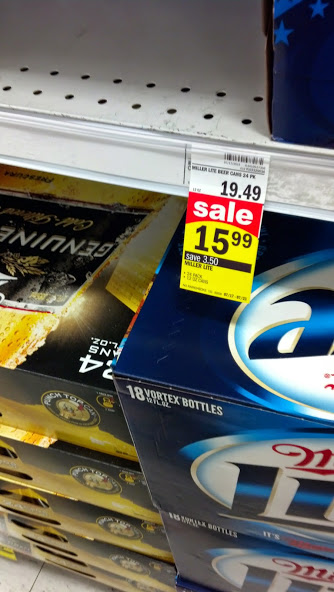
Beer Prices Hit By Inflation

Beer Inflation

You don’t have to be an economist to understand inflation is hitting at all levels over the past 7-10 years. The grocery store is a place where consumers can feel the pinch. Inflation just isn’t prices going up either. Another side of inflation is when the manufacturer reduces the size of the product and yet the price still stays the same.

In my household, we constantly analyze prices at the grocery store when we go to Walmart or Sam’s Club. Prices are going up and some product size is shrinking. The other night when I went to go pick up a case of beer at the local Meijer grocery I was a little shocked at the sticker sale price. Meijer is known as a fair priced grocery store and Indiana overall has stable pricing on various economic segments. The above picture is highest I ever seen. Beer prices overall have been going up in the last 3 years from my observation and if you Google the matter, you will see several articles over the last five years detailing rising beer costs.

Many factors go into the pricing of an item when it sells. Dollar value, taxes, regulation, demand or lack of, material cost, fuel, etc. I did a little research and saw some areas other than dollar weakness contributing to price increase such “hops” being down this year. Why I keep circling back to dollar weakness is because the craft beer sector has exploded which should affect the demand for typical beers. Countless sites have even stated Miller and Budweiser have lost sales over the last few years.

Just watch prices in your area and see the climb.

State of Indiana Reports Budget Surplus, Reserve Goes Over $2 Billion

Economic news rolled out of Indianapolis today showing the State of Indiana continuing stable policies from years past. Many states have taken to spending quite a bit more in the last decade whether it be good or bad times. Indiana has taken a more valued approach to fiscal spending and cutting. CNHI Statehouse Bureau had more on this:

As of June 30, the state had a $106 million operating surplus and reserves of $2 billion, Auditor Suzanne Crouch reported Monday. Crouch, a Republican and former state lawmaker, praised Pence for Indiana’s strong financial state, saying his wise management decisions kept the state in the black.  The state finished fiscal 2014 with a surplus after agencies cut spending by about $150 million from what the legislature allocated in the biennial budget crafted last year. Pence ordered those cuts last December, when tax collections were less than expected.

Governor Pence has continued on former Governor Daniel’s department cuts. Colleges had $34 Million cut. I really think colleges need drastically cut more as many of them are becoming wastelands of ideology that do not prepare teenagers coming out of highschool. How they are set up are very archaic and inefficient. The state has started pouring money into vocational training which will pay off in the coming decade. Five year trend that has popped up with dwindling tax revenue has been casinos. Ohio opening up casinos has taken a bite out of Indiana’s revenue in that area.

Democrats of course are not happy with the surplus. Here is what Senate Democratic Leader Tim Lanane, D-Anderson, said in a statement:

“Let’s not congratulate ourselves for hoarding tax dollars while so many of those taxpayers continue to struggle.”


U.S. House Votes to Cut IRS Budget

While I personally would like to see Lois Lerner criminally arrested for lying to Congress and pulling her “my e-mails” disappeared, I will take this small victory being reported by the AP:

The GOP-controlled House has voted to slash the budget for the Internal Revenue Service’s tax enforcement division by $1.2 billion, a 25 percent cut that would mean fewer audits of taxpayers and make it more likely that people who cheat on their taxes will get away with it. The House approved the cuts by voice vote after little debate Monday night as it took up a $21 billion spending bill that sets the IRS budget.

The IRS doesn’t need reform, it needs to be gutted. The pipe dreams of little fixes hear and there is over. Replace the IRS with a new tax code like the Fairtax.

Unfortunately the Senate led by Harry Reid will not act on this and just table it. More bad news, in a few years the IRS will be full tilt Obamacare enforcement so I would expect more scandals of bigger proportion then Lois Lerner.

MLB All Star Game: Self-Serve Beer

beer

With the MLB All Star Game about to begin, fans will be able to buy their beer at a self-serve beer machines. The idea has been attempted before, but this time around the technology is a lot of better. Here is how it works:

After an ID check — “Just because it’s self-serve doesn’t mean it’s unmonitored,” Twins spokesman Chris Iles said — fans buy a card pre-loaded with $10, $20 or $40. Then they hop in line for their beer of choice: Budweiser and Bud Light for 38 cents an ounce (a little over $6 for a pint), or Goose Island 312 Urban Pale Ale and Shock Top’s Lemon Shandy for 40 cents per ounce. The self-pouring is monitored, too, to stop anyone who may be overserving themselves.

There have been some issues…..

Target Field’s new machines have LCD screens with pouring instructions behind each set of taps, but Spike said they ran into a few hiccups with messy pours on a test run last week, especially after the machines sat idle. The stations will stay at Target Field for the rest of the season, and plans for expansion or changes will depend on fan feedback.

It will be interesting to see the reviews on this machine. Many ballparks are facing actual physical fan attendance issues and this machine would easily replace many beer vendors if it was successful.

U.S. “Student-to-Teacher” Ratio in Public Schools

If you ever debate public education with people you will sometimes hear the phrase “student-to-teacher” ratio as a source of need for more funding or for better teaching. JustFactsDaily.com released an e-mail with this question and the result may surprise you.

In 2010, according to the U.S. Department of Education, the average student-to-teacher ratio in public schools during 2010 was 16:1.

The National Center for Education Statistics also has information on student to teacher ratio in education.

During the 1970s and early 1980s, public school enrollment decreased, while the number of teachers generally increased. For public schools, the number of pupils per teacher—that is, the pupil/teacher ratio—declined from 22.3 in 1970 to 17.9 in 1985. After enrollment started increasing in 1985, the public school pupil/teacher ratio continued to decline, reaching 17.2 in 1989. After a period of relative stability during the late 1980s through the mid-1990s, the ratio declined from 17.3 in 1995 to 15.4 in 2009. The public school pupil/teacher ratio increased to 16.0 in 2010. By comparison, the pupil/teacher ratio for private schools was estimated at 12.2 in 2010. The average class size in 2007–08 was 20.0 pupils for public elementary schools and 23.4 pupils for public secondary schools.