New Ponzi Scheme: Invest in Government

image
Government wants you to invest in them. President Obama talked of a new investment fund in the past and now, without consent of Congress, has started it up through the Treasury Department. Here is more from the Wall Street Journal:

A form of Roth Individual Retirement Account that allows people to save after-tax dollars and watch them grow tax-free until retirement, the new myRA offers a single investment option. It’s a private version of the G Fund that is available to federal workers and has lately been delivering annual returns of about 2% on its portfolio of Treasury securities.

Government is guaranteeing no fees to the investor. That is political code for the taxpayer will subsidize it.

Treasury is funding the program out of the budget for its Bureau of the Fiscal Service. The assertion here is that existing law allows this part of the Treasury to hire financial agents as part of its mission to efficiently finance the federal government.
Taxpayers are covering the costs, though their elected representatives in Congress never voted to create the program. So far Treasury also hasn’t told us the fees it is paying Comerica.


Competition Has Driven Technology Prices Down for Consumers

1964 christmas

Economist Mark J. Perry at the American Enterprise Institute provided a piece showing the technology marketplace and how competition helps not only bring more products to the marketplace but also cheaper pricing.

Pictured above are some color TVs from the 627-page 1964 Sears Christmas Catalog, available here at the WishbookWeb website along with many other Christmas catalogs from 1933 to 1988. The original prices are listed ($750 for the Sears Silvertone entertainment center and $800 for the more expensive one), and those prices are also shown converted to today’s 2014 dollars using the BLS Inflation Calculator: $5,700 for the basic 21-inch color TV model and $6,100 for the more expensive model.

Click on this link to see what he found you can buy with the amount of money in todays dollars from the televisions listed above.

He also leaves on this final note and one reason why the U.S. is still one of the greatest economic innovators the world has ever seen.

As much as we might complain about a slow economic recovery, the decline of the middle class, stagnant median household income, rising income inequality and a dysfunctional Congress, we have a lot to be thankful for, and we’ve made a lot of economic progress in the last 50 years as the example above illustrates, thanks to the “magic and miracle of the marketplace.”

Middle East Controls American Oil Refinery Business

saudi arabia
While many media pundits are on tv celebrating the U.S. leap in oil production there is another side not talked about, Middle East countries Saudi Arabia and Qatar own most of the oil refinery business in the United States. Here is more from a 2013 Washington Times article:

Today, the largest oil refinery in the United States, Motiva in Texas, is owned by Saudi Aramco (a state-owned company) and Royal Dutch Shell (a British and Dutch company). The refinery recently completed a major expansion project, originally driven by growing American demand for Saudi oil in 2007.

Since the expansion began, however, U.S. demand for oil has fallen and production of North American oil has risen. Saudi Aramco has, therefore, repositioned Motiva to accept this change in the market. In addition to importing Saudi oil, the Motiva expansion allows Saudi Aramco to refine and export petroleum products to Latin American markets. Most important, though, the expansion enables Saudi Aramco to refine the heavy crude oils now being extracted from Canadian and American oil sands and shale fields.

Saudi Arabia is also being joined by Qatar in not only the U.S. but also in Canada:

Qatar is also positioned to extract significant profits from the American energy industry. According to the U.S. Energy Information Administration, Qatar holds the third-largest natural-gas reserve in the world and has been the world leader in liquefied natural-gas technology and exportation since 1997. Yet Qatar Petroleum International (also a state-owned company) owns a 70 percent stake in the Golden Pass re-gasification terminal in Texas. The terminal was previously intended to import Qatar’s natural gas into the United States, but with the boom in North American natural gas, Qatar is now seeking to repurpose the facility to export liquefied natural gas and profit from North American resources. Qatar Petroleum International’s CEO, Nasser al-Jaidah, recently stated that the company is seeking to invest in North American shale, a highly touted source of America’s potential energy independence, and on April 15, the company acquired a stake in Suncor Energy’s natural-gas holdings in Canada.

Why Gas Prices Will Go Back Up

image

As crude oil prices have collapsed over the last few months oil producers have taken notice here in the US. Once oil prices reach a certain point, oil rig operators start shutting down rigs because it cost more to run them then what it’s worth in pumping oil.

Oil tycoon Boone Pickens is a guy you want to follow on predictions in the oil market and he just came out with one reason why oil prices will likely go back up in 2015. Robert Wenzel from Economic Policy Journal pointed to this interview for reference:

Boone Pickens was on CNBC this morning and he noted that some 75 rigs have been laid down, out of a total of around 1,500 rigs operating in the US. He expects that another 500 rigs will be taken out of operation over the next few months.

This is a big swing in oil production and something that needs to be monitored along with the strength of the dollar.

Inflation Graph: Massive Price Increases Last 14 Years

image

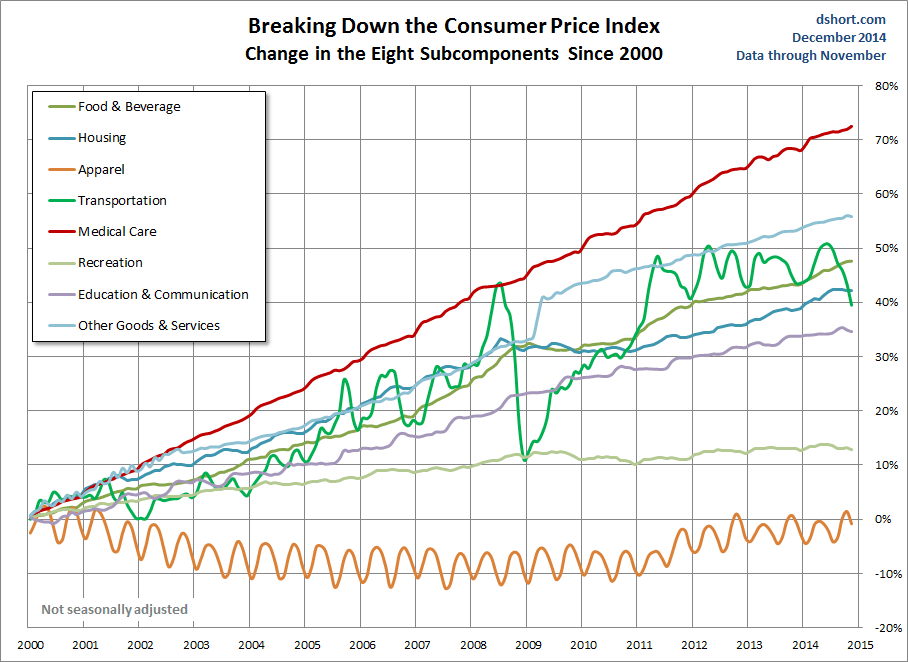
As the Federal Reserve started printing money here is a listing showing how prices took off.

H/T: Economic Policy Journal

Federal Government Deficit for 2015 Fiscal Year

government
CNSNews.com is reporting the federal governments 2015 first two fiscal months of tax revenue collected and how much it spent.

The U.S. Treasury continued to rake in tax dollars at a record rate in November as the federal government closed out the first two months of fiscal 2015 with $404,155,000,000 in total receipts, according to the Monthly Treasury Statement released today.
Even with these record revenues, the Treasury ran a deficit of $178.531 billion deficit in October and November as it spent $582.686 billion.

What were the sources of revenue?

The biggest source for the record federal revenue during the two-month period was the individual income tax. It brought in $192,619,000,000 in October and November. The second biggest source was “Social Insurance and Retirement Receipts,” the taxes Americans pay for Social Security and Medicare. These brought in $146,263,000,000.

Economics & “Coolidge”

image

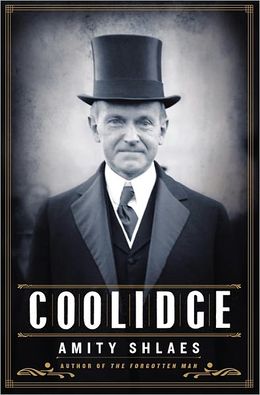
Halfway through reading Amity Shlaes book “Coolidge”. Very detailed and good reference for what the country was politically/economically facing at the time. Here are some economic factors from Calvin Coolidge time period:

Debt after WWI was $27 Billion. Nine times higher than 2 years before.

College professor salaries in 1890 were $2,500. This was 20 times more then tuition. Average American wage earner made $425/year.

1905, home in Massachusetts cost between $2,000-$5,000. Banks did not do mortgages. Building associations did.

1915 IRS employed 4700 people

1920 federal budget was $6.3 Billion and Calvin Coolidge Vice Presidential salary was $12,000.

From 1920 – 1921 Ford Motor Company sold 1.25 million cars.

Are Your Local Indiana Officials Financially Literate

Few years back I was approached by an acquitance to support their run for local office. Coincidentally I had just reviewed some economic news on their budget situation in the town he was running in. The person gave me a beautiful speech about “giving back” and helping the poor. I asked him a direct financial question pertaining to the financial issue he would have to deal with once in office. His look was all I needed to know he had no clue in what I was asking about.

Liz Farmer addresses this question in an article from February 2014 about the impact of municipalities not having people elected with economic knowledge.

In the fall of 2012, the Minneapolis suburb of Vadnais Heights found itself with a credit rating downgraded to junk status. Local leaders in the town of 12,000 were not only insulted, but shocked. Vadnais Heights owed its disgrace to one action it didn’t think was that crucial: It had stopped making bond payments on a $25 million sports complex. The town had expected the complex to meet its borrowing costs through added revenue, but it had fallen short of estimates. So town officials had ceased paying bondholders rather than choosing to bill taxpayers for the unexpected costs.

What is particular events led to misunderstandings of laws?

Failure to understand financial outcomes, even when combined with good faith, is more dangerous to states and localities than it has ever been. Tougher ratings standards are part of the picture, but the problem goes far beyond those. Municipal and state leaders face an entirely new regulatory climate with the passage of the federal Dodd-Frank Wall Street Reform and Consumer Protection Act. That law, which is still being implemented, is bringing increased scrutiny of government financial performance on all levels.

Overall the above situations are not isolated cases. Smaller jurisdictions have issues getting economic competent people into office and usually make decisions on the fly.
I found this quote in the article to be very telling:

“When you think about it, I’m a retired cop and now I’m chairman of a finance committee of a $3 billion organization and the 10th largest city in the nation,” says San Jose, Calif., Councilman Pete Constant. “Can you imagine a corporation taking someone like that and putting them in charge of it with so little experience?”

Dutch Central Bank to US: Pound Sand

The United States Federal Reserve is not trusted and it doesn’t appear to be getting any better. In plain speak, the Dutch just told them they didn’t either. Also take this news as a great investment tip to start buying gold and silver as a precautionary investment.

The Dutch central bank, De Nederlandsche Bank, has repatriated in utmost secrecy 122.5 tonnes of gold from the Federal Reserve Bank of New York to its vaults in Amsterdam, The Netherlands, according to a press release from DNB published today.

“It is no longer wise to keep half of our gold in one part of the world,” a DNB spokesman said. WOW.