Middle East Controls American Oil Refinery Business

saudi arabia
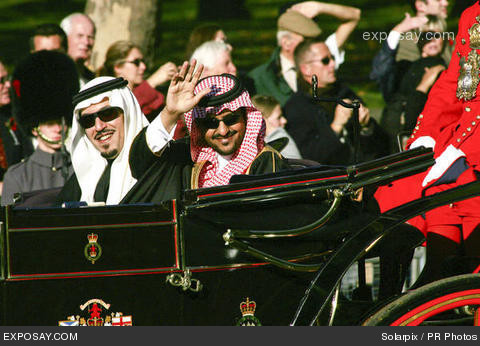
While many media pundits are on tv celebrating the U.S. leap in oil production there is another side not talked about, Middle East countries Saudi Arabia and Qatar own most of the oil refinery business in the United States. Here is more from a 2013 Washington Times article:

Today, the largest oil refinery in the United States, Motiva in Texas, is owned by Saudi Aramco (a state-owned company) and Royal Dutch Shell (a British and Dutch company). The refinery recently completed a major expansion project, originally driven by growing American demand for Saudi oil in 2007.

Since the expansion began, however, U.S. demand for oil has fallen and production of North American oil has risen. Saudi Aramco has, therefore, repositioned Motiva to accept this change in the market. In addition to importing Saudi oil, the Motiva expansion allows Saudi Aramco to refine and export petroleum products to Latin American markets. Most important, though, the expansion enables Saudi Aramco to refine the heavy crude oils now being extracted from Canadian and American oil sands and shale fields.

Saudi Arabia is also being joined by Qatar in not only the U.S. but also in Canada:

Qatar is also positioned to extract significant profits from the American energy industry. According to the U.S. Energy Information Administration, Qatar holds the third-largest natural-gas reserve in the world and has been the world leader in liquefied natural-gas technology and exportation since 1997. Yet Qatar Petroleum International (also a state-owned company) owns a 70 percent stake in the Golden Pass re-gasification terminal in Texas. The terminal was previously intended to import Qatar’s natural gas into the United States, but with the boom in North American natural gas, Qatar is now seeking to repurpose the facility to export liquefied natural gas and profit from North American resources. Qatar Petroleum International’s CEO, Nasser al-Jaidah, recently stated that the company is seeking to invest in North American shale, a highly touted source of America’s potential energy independence, and on April 15, the company acquired a stake in Suncor Energy’s natural-gas holdings in Canada.

How Much Food Does it Take to Feed 2 College Football Teams

outback bowl
Outback Steakhouse sponsors the college football bowl game “Outback Bowl”. The Aubrun Tigers take on the Wisconsin Badgers and will be played on January 1, 2015. The two teams meet for dinner sponsored by Outback Steakhouse and here is how much food was there via the Bleacher Report:

Outback Bowl dinner for Auburn & Wisconsin: 750 pounds of steak, 900 lbs. of ribs, 750 lbs. of chicken, 1,600 shrimp, 1,200 lbs. cheese cake.

Why Gas Prices Will Go Back Up

image

As crude oil prices have collapsed over the last few months oil producers have taken notice here in the US. Once oil prices reach a certain point, oil rig operators start shutting down rigs because it cost more to run them then what it’s worth in pumping oil.

Oil tycoon Boone Pickens is a guy you want to follow on predictions in the oil market and he just came out with one reason why oil prices will likely go back up in 2015. Robert Wenzel from Economic Policy Journal pointed to this interview for reference:

Boone Pickens was on CNBC this morning and he noted that some 75 rigs have been laid down, out of a total of around 1,500 rigs operating in the US. He expects that another 500 rigs will be taken out of operation over the next few months.

This is a big swing in oil production and something that needs to be monitored along with the strength of the dollar.

Merry Christmas and Have a Wonderful Day

image

How Much Does it Cost to Operate Guantanamo Bay

Guantanamo Bay houses terrorists captured around the world by the United States military and other intelligence agencies. In 2014 it cost American taxpayers $397 Million.

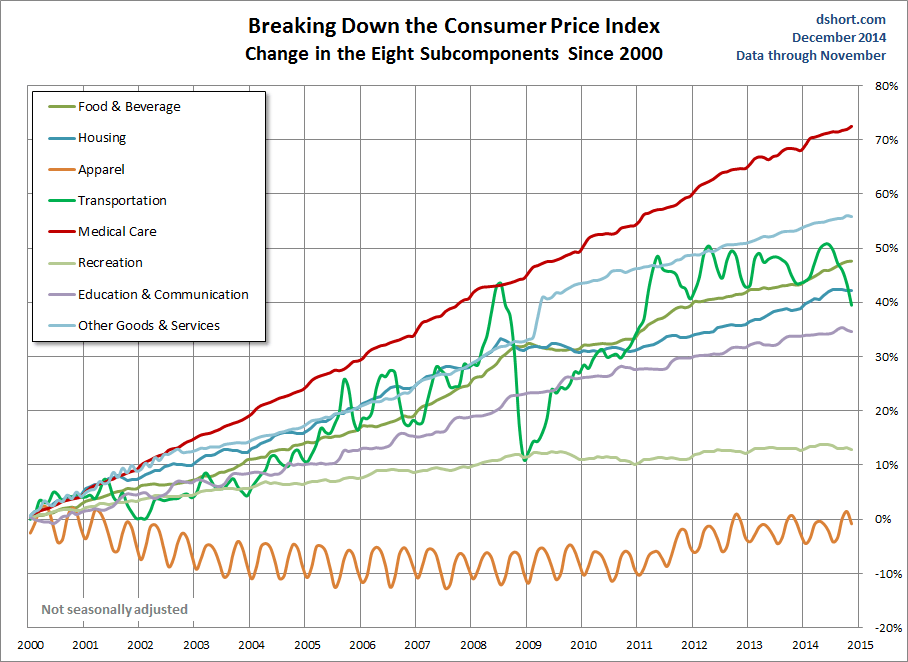
Inflation Graph: Massive Price Increases Last 14 Years

image

As the Federal Reserve started printing money here is a listing showing how prices took off.

H/T: Economic Policy Journal

What Santa Claus Gets Paid

image

Tis the season for kids visiting Santa Claus at the mall or Santa being hired out for large Christmas parties. What is the pay for being ol’ St. Nick. Aol.com had one write up and found this:

First, the good news: The pay can be exceptional. A PayScale survey showed that Santas can earn up to $100 an hour. Amounts posted at RealSantas.com show even higher rates, $175 to $300 for the first hour for posing as Santa at private parties. Additional hours average $125 to $200 each.

Marketwatch found mall Santa’s get the shaft while others make the money:

Mall Santas have a far less lofty rate ranging between $10 and $40 per hour. Those offering private visits (no chimneys, please) might charge anywhere from $50 to $300 per hour. Typical Saint Nick earns more in six weeks than many consumers do in six months. A Santa might make $8,000 to $15,000 during the holiday season, and particularly talented ones can pull in as much as $80,000

Don’t just think Santa shows up without any effort either.

Many pay as much as $1,000 in tuition and other costs to receive specialized training at a professional Santa school. On the syllabus: Sign language, voice projection and storytelling, an immersion course in the six levels of child development and 30 different ways to work with a hesitant child.

How Much Do Consumers Pay to Healthcare Providers?

Just Facts Daily posed a question to readers regarding healthcare payments. Here is the question and answer:

What portion of all healthcare spending in the U.S. is directly paid by consumers to healthcare providers (i.e., not indirectly paid through middlemen like insurance companies or governments)?

Less than 25%

In 2009, consumers directly paid for 12% of all healthcare spending in the U.S., as compared to 48% in 1960. This trend has been driven by government policies and is a major factor in the rise of healthcare spending, because it reduces consumers’ incentive to shop for the best value.

Tim Tebow Raking in Major Speaking Fees

image

Like him or not, Tim Tebow is making a better financial living in appearance and speaking engagements than actually playing football. Some figures I pulled in how much he is getting on the circuit.

Celebrity Talent International has his fees ranging from $75k-$100k.

Christian Speakers 360 has him listed for $50,000.

Athlete Promotions has him listed for $50-$100k.

Side note, speaking fees usually do not cover travel and lodging expenses which are also picked up by the event sponsor.