U.S. Government Hits Debt Limit on March 16th

government

United States Government spends so much money these days that the debt is reaching its ceiling again. Do not expect Republicans put much of a fight up in stopping any raises as they usually join Democrats in governments spending addiction.

Via CNBC

Unless Congress takes action, the U.S. will hit its debt limit on Mar. 16, but would begin taking “extraordinary measures” to finance the government on a temporary basis, according to the U.S. Treasury.
In a Friday morning letter to House Speaker John Boehner and other House and Senate leaders, Treasury Secretary Jack Lew said that his office will be forced to suspend the issuance of State and Local Government Series securities on Mar. 13 unless the debt limit is raised.

“Accordingly, I respectfully ask Congress to raise the debt limit as soon as possible,” Lew wrote in his letter.

The Congressional Budget Office said this week that if Congress does not raise the federal debt limit, the Treasury Department will exhaust all of its borrowing capacity and run out of cash in October or November, slightly later than a previous forecast.

U.S. Trash: How It’s Disposed

image

Just Facts Daily posted the following question:

In the U.S., what portion of all trash (measured by weight) is recycled, burned for energy, or composted?

Answer: 46%

You can read more facts on trash at JustFactsDaily.com

Millennial Assumption Debunked

Joel Kotkin published an article titled “Misunderstanding the Millennials” (read here). Very fascinating data driven article which debunks the idea that millennials (generation born after 1983) are seeking their place of residency in urban environments.

Data obtained in this article shapes a lot of business decision making for various entities and why listening to theorists who “want” urbanization compared to what the consumer wants is critical. Here are some of the findings:

in a 2010 survey by Frank Magid and Associates – where would be their “ideal place to live,” more millennials identified suburbs than previous generations, including boomers. Another survey, published last year by the National Association of Homebuilders, found that 75 percent of millennials favor settling in a single-family house, 90 percent preferring the suburbs or even a more rural area but only 10 percent the urban core.

only 20 percent of millennials live in urban core districts; nearly 90 percent of millennial growth in major metropolitan areas from 2000-10 occurred in the suburbs and exurbs.

A full 82 percent of adult millennials surveyed said it was “important” to have an opportunity to own a home. This rose to 90 percent among married millennials, who generally represent the first cohort of their generation to start settling down.

Another survey, this one by the online banking company TD Bank, found that 84 percent of renters ages 18-34 intend to purchase a home. Still another survey, this one from Better Homes and Gardens, found that three in four saw homeownership as “a key indicator of success.”

In a 2014 survey by the Demand Institute (sponsored by Nielsen and the Conference Board), millennials also were found to favor suburbs, embrace homeownership and crave more space, much like previous generations.

City of Chicago Downgraded by Moody’s

RahmEmanuel

Via Economic Policy Journal:

Moody’s Investors Service has downgraded Chicago’s debt rating, citing its overwhelming pension burden. Moody’s dropped the city’s rating to Baa2.

A rating of Baa2 is eight notches below the highest debt rating of Aaa.

Moody’s said in its statement its outlook for the city remains negative. A drop of two more notches would make mean the city’s bonds would become“junk” bonds.

“We strongly disagree with Moody’s decision to reduce the city’s credit rating and would note that Moody’s has been consistently and substantially out of step with the other rating agencies, ignoring the progress that has been achieved,” a spokeswoman for Mayor Rahm Emanuel, Kelley Quinn, said in a statement.

Chicago has more than $8 billion in taxpayer-backed general obligation debt, as well as roughly $800 million in additional bonds backed by sales tax and motor fuel tax revenues.

Canada Investing in Indiana’s I-69 Project

Indiana currently is in the middle of the I-69 Highway project. Much of the financing for “Phase 5” made history but many didn’t take notice of why.

The I-69 Section 5 project will upgrade 21 miles of SR 37 (an existing four-lane divided highway) between Bloomington and Martinsville, Indiana to full Interstate standards. The $325 million project includes four new interchanges and four new overpasses, in addition to improvements at existing interchanges and additional travel lanes in urban areas along the corridor.

In April 2014 Canada’s Public Sector Pension Investment Board (which also holds a minority equity stake in Isolux Infrastructure) took a 49 percent equity stake in the concession company through its affiliate Infra-PSP Canada; this represents the first upfront direct investment in a U.S. P3 project by an international public pension fund. The partners reached financial close in July 2014, and construction is scheduled to take 28 months, with the project slated to open by the end of 2016.


JD Supra Advisor noted foreign investment in U.S. infrastructure projects like Indiana is a test run and stability is key for any future investments.

Given the long term nature of a P3 investment, political and regulatory stability is essential to encouraging investment. For overseas investors in the US market, this will require confidence that there is political and public acceptance of private sector investment in infrastructure.

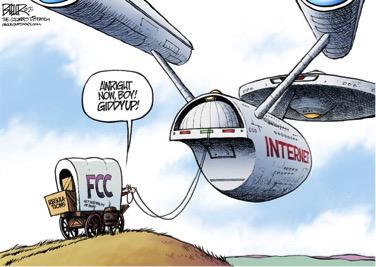
Net Neutrality Best Summed Up

image

Obamacare Enrollees Getting Taxed

image

Last week I reported H&R Block website had a new feel good name for one Obamacare tax.  This week new analysis comes from Americans for Tax Reform about more taxes within the law:

The majority (52 percent) of Obamacare enrollees receiving an advance premium tax credit to purchase Obamacare insurance is facing the prospect of paying back $530 of that tax credit to the IRS, according to a new study from H&R Block.  This clawback is reducing the refunds for these taxpayers by 17 percent this filing season.

Families of four earning less than $97,000 are eligible for a credit.  So is a single mother with two children earning less than $80,000 and an unmarried/childless taxpayer earning less than about $12,000.  By definition, these are the lowest income recipients of Obamacare health insurance outside the Medicaid-eligible population.  Higher income taxpayers received no tax subsidy and aren’t facing this tax season surprise.

According to the study, a majority of credit recipients–52 percent–have had to pay back the IRS an average of $530, reducing their refunds by an average of 17 percent.

Read the rest here

Who Qualifies for the Army?

army

Former Florida Congressman Lt. Colonel Allen West recently posted a scathing piece denouncing stereotypes military recruits face in segments of American society. Within the piece he outlined some interesting stastitics the Army faces in recruiting future soldiers.

Here is the breakdown:

The recruiting pool for the U.S. Army is individuals between 17 and 24 years old. 71 percent would not qualify to join the Army.

What are the major disqualifiers? First, some 31 percent cannot join because of multiple felonies and other moral issues such as drug use or other law violations. The other major category that disqualifies 17 to 24-year-olds is lack of fitness/obesity and other medical issues.

Only two percent can’t qualify for the Army now due to aptitude/academic issues, so the major disqualifying points have to do with moral and physical standards.


Here are the numbers broken down of the qualified applicants:

Now understand, of the 29 percent who could qualify, here is the breakdown that LTC Patton and his staff shared with me. Only 15 percent of individuals age 17 to 24 have any interest in joining the military.

Lots of Erections at the Pentagon

smiling bob

The unfortunate part of government spending is taxpayers don’t get to know what is being spent until it gets spent. CBS News uncovered some “dysfunctional” spending from the pentagon in a recent report:

According to the Military Times, data from the Defense Health Agency indicate the U.S. Department of Defense spent $41.6 million on Viagra and $84.24 million total on drugs for erectile dysfunction in 2014.

Since 2011, the bill for covering drugs like Viagra, Cialis and Levitra for active and retired military personnel and eligible family members totalled $294 million — nearly as much as four U.S. Air Force F-35 Joint Strike Fighters, says the Military Times.

The DoD first began covering the cost of Viagra prescriptions in 2012, and currently another seven types of erectile dysfunction medications are paid for under the federal agency’s health plan. Of the 1.18 million prescriptions filled in 2014, 905,083 were for Viagra, at a cost of $41.6 million. Cialis was the second most commonly prescribed ED drug, with 185,841 prescriptions totaling $22.82 million. Revatio, the priciest ED drug, was prescribed the least with 1,699 prescriptions in 2014 for a total cost of $2.24 million.

You can read the rest of the article here.